
Paris Metro Guide: City Navigation Mastered
Picture this: You’re standing at the entrance to Châtelet-Les Halles station during rush hour, watching streams of Parisians glide past you with the kind of effortless grace that makes navigating the world’s second-busiest metro system look like an interpretive dance. Meanwhile, you’re clutching your phone, squinting at a metro map that resembles a plate of colorful spaghetti, wondering if you’ll ever achieve that same level of underground confidence.
I’ve been there. But here’s what I learned after countless trips beneath the City of Light: the Paris Metro isn’t the labyrinth it appears to be at first glance. This Paris Metro guide will help you navigate those underground passages with the confidence of a local, turning what seems like urban chaos into your secret weapon for exploring every hidden corner of this magnificent city.
Understanding the Paris Metro Guide: The System’s Beautiful Logic
The first time I descended into a Paris Metro station with my camera bag, I felt overwhelmed by the maze of tunnels and platforms. But step back for a moment, and you’ll see the system’s elegant design reveals itself like a photograph coming into focus.
The Paris Metro comprises 16 lines (numbered 1-14, plus 3bis and 7bis) that crisscross beneath Paris like the veins of a living organism. Each line has a distinct color on the metro map, and here’s the trick that nobody tells you: direction is always indicated by the final stop on that line. When you see “Direction Château de Vincennes,” you’re not actually going to Château de Vincennes (unless you are)—you’re simply going in that direction.
I learned this the hard way during a golden hour shoot at Sacré-Cœur. I needed to get to Anvers station, jumped on Line 2 going the wrong direction because I didn’t check the terminus, and ended up at Porte Dauphine. The light was perfect, and I missed it. Don’t be me.
The Color-Coded Wisdom
Each metro line has its own personality. Line 1, the golden line, runs east-west through major tourist spots—it’s automated and often packed. Line 4 cuts north-south through the heart of Paris. Line 14, the newest automated line, is the Mercedes of metro lines: fast, smooth, and air-conditioned. When I’m shooting in Paris during summer, I sometimes take Line 14 just for the air conditioning break between locations.
The stations themselves tell stories too. Some, like Arts et Métiers with its copper-plated steampunk design, are destinations in themselves. I’ve spent hours photographing the art nouveau entrances designed by Hector Guimard—those iconic green archways that scream “Paris” in every travel photograph.
Ticket Options: Choosing Your Access Pass
Let’s talk about the practical stuff that’ll save you both money and headaches. The ticketing system seems complicated until you realize it’s actually quite straightforward for visitors.
Single tickets (called t+ tickets) cost around €2.10 and are valid for one journey within central Paris, including transfers between metro lines and buses within 90 minutes. Here’s what I wish someone had told me on day one: buy a carnet of 10 tickets at once. You’ll save about 30% compared to buying singles.
For my week-long photography trips, I swear by the Navigo Easy pass. It’s a rechargeable card that costs €2 for the card itself, then you load it with tickets or passes. The game-changer? You can add a weekly Navigo pass (Forfait Navigo Semaine) for around €30, giving you unlimited travel Monday to Sunday across all zones. If you’re staying longer than three days and plan to explore beyond central Paris—say, photographing the gardens at Versailles or the medieval streets of Saint-Denis—this is your golden ticket.
Here’s the calculation I do: if you’re taking more than four metro rides per day for more than three days, the weekly Navigo pass pays for itself. I typically take 6-8 rides daily when I’m working in Paris, so it’s a no-brainer.
Navigating Like a Parisian: The Unspoken Rules
The morning light was just catching the Seine when I first witnessed the ballet of Parisian metro behavior. There’s a rhythm to it, an unspoken choreography that separates visitors from locals.
Stand right, walk left on escalators. Always. The left side is the fast lane, and Parisians will not hesitate to say “Pardon” with varying degrees of politeness if you’re blocking their path. I learned this while carrying a tripod during rush hour—not my finest moment.
When the train arrives, wait for passengers to exit before boarding. This isn’t just politeness; it’s practical physics. The French have perfected the art of the efficient entrance—watch them for one journey, and you’ll understand.
The Secret Map Language
Your Paris Metro guide map uses symbols that become second nature once you know them. The little circle with lines radiating out? That’s a correspondance—a transfer point. Some correspondances are 30-second walks through a connecting hallway. Others, like Châtelet-Les Halles, involve what feels like an underground odyssey through shopping centers and endless corridors.
The white circles on your map indicate wheelchair accessibility, though I’ll be honest—Paris Metro’s accessibility is improving but still challenging. If you’re traveling with a lot of luggage or photography equipment like me, plan your route to minimize stairs. Apps like Citymapper will show you step-free routes when available.
Timing Your Metro Adventures
There’s something about the Paris Metro that photographs can’t quite capture: the way it pulses with the city’s rhythm. As a photographer, I’ve learned that timing your metro use is as crucial as timing your shoots.
Rush hours (8-9:30 AM and 5:30-7:30 PM) transform the metro into a sardine can with fluorescent lighting. If you can avoid these windows, do it. I plan my morning shoots to either start very early (catching that gorgeous blue hour light) or after 10 AM when the commuter tide recedes.
Sundays in Paris are when the metro reveals its gentler side. Fewer commuters mean more space, but also slightly reduced frequency on some lines. Pro tip: download the RATP app or check the digital displays at stations showing real-time arrival information.
Late night photography sessions require planning too. Most metro lines stop running around 1:15 AM (2:15 AM on Friday and Saturday nights). Miss that last train, and you’re looking at expensive taxi rides or long waits for night buses.
Common Mistakes (That I’ve Definitely Made)
Let me save you from my greatest metro misadventures.
Mistake #1: Not validating your ticket. Those purple validation posts at station entrances aren’t suggestions. In my first week, I walked through with an unvalidated ticket because I was distracted composing a shot in my head. The fine was €50. Validate. Every. Time.
Mistake #2: Studying the map while blocking the turnstile. Step aside first, then consult your map or phone. The turnstile area is like a highway entrance ramp—keep it flowing.
Mistake #3: Assuming all exits are equal. Each station has multiple exits (sorties), and choosing the wrong one can leave you blocks away from your destination. The signs show street names for each exit. Before ascending, check which exit gets you closest to your target.
Also, trust me on this one: keep your ticket until you fully exit the metro system. Some stations have ticket gates at exits, not just entrances. I’ve seen confused tourists unable to leave stations because they threw away their tickets after boarding.
The Stations Worth Photographing
While this is primarily a practical Paris Metro guide, I’d be failing my duties as a photographer if I didn’t mention the stations that are artworks in themselves.
Arts et Métiers on Line 11 resembles a submarine—its copper-plated walls and portholes were designed to honor the nearby technical museum. The light catches those copper panels just so during midday, creating this warm, industrial glow that’s irresistible to photograph.
Concorde displays the text of the Declaration of the Rights of Man on its walls in blue and white tiles. It’s powerful and beautiful, and the morning light streaming down from the platforms creates these dramatic shadows that make for stunning compositions.
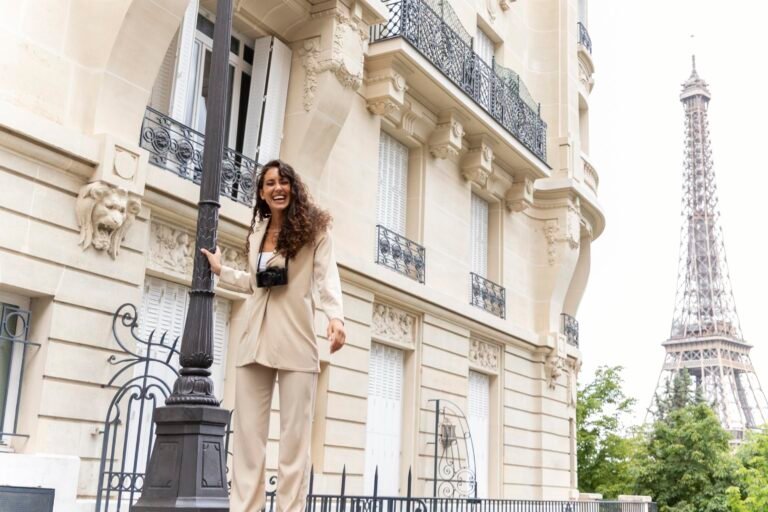
Some platforms offer unexpected views. Line 6, which runs above ground between Bir-Hakeim and Passy, gives you this incredible view of the Eiffel Tower. I’ve photographed it countless times, and each journey reveals different light, different weather, different magic.
Your Metro Survival Kit
Based on years of underground navigation with photography equipment, here’s what I always carry:
A fully charged phone with offline metro maps downloaded. The Citymapper app works underground in many stations thanks to cell service, but not everywhere. Paris Metro’s official RATP app is excellent too—it includes line status updates, real-time arrivals, and itinerary planning.
Hand sanitizer and a small bottle of water. The metro in summer can be stifling, especially Line 1 in July.
Comfortable shoes with good grip. Those polished metro station floors get slippery when wet. I’ve done an unintentional ice-skating impression on rainy days.
If you’re carrying camera equipment like I do, invest in a comfortable crossbody bag rather than a backpack. In crowded trains, backpacks should come off your back and be held in front—it’s both polite and practical (pickpockets love crowded metros).
Real Talk: When the Metro Isn’t the Answer
Here’s something most Paris Metro guides won’t tell you: sometimes walking is better. Paris is remarkably compact, and some destinations that look far on the metro map are actually pleasant 15-minute walks above ground.
From the Louvre to Notre-Dame? Walk along the Seine instead of taking the metro. You’ll see more, experience more, and probably arrive at the same time once you factor in descent, wait, travel, and ascent times. I’ve learned that any trip of two stops or less is often faster on foot—and infinitely more photogenic.
The Final Frame
The Paris Metro transformed from intimidating labyrinth to trusted companion somewhere around my third week of using it daily. Now, descending those art nouveau staircases feels like entering a secret network that connects not just locations, but moments and memories.
You’ll develop your own relationship with it too. You’ll discover which stations smell like fresh bread, which transfers you can sprint through, and which platforms offer the best people-watching. You’ll learn to recognize the particular squeal of Line 1 trains and the pneumatic whoosh of Line 14’s doors.
This Paris Metro guide gives you the framework, but the real mastery comes from experience. Make mistakes. Take the wrong line once or twice. Some of my favorite photographic discoveries happened because I took wrong turns in the metro system.
The beauty of Paris isn’t just in the Eiffel Tower or the Louvre—it’s in the journey between them, in the efficient elegance of a system that moves millions of people daily through layers of history beneath cobblestone streets. Master the metro, and you master Paris.
Now if you’ll excuse me, I have a sunrise shoot at Trocadéro, and the first metro leaves in thirty minutes.
Sources and Additional Resources
For official schedules, updates, and detailed network maps, visit the RATP official website. For comprehensive Paris travel planning including metro integration with other transportation, check Paris Convention and Visitors Bureau.