French Sauces Masterclass: Decoding Culinary Art
After twenty years in French kitchens—from the heat of a Michelin-starred brigade to the quiet precision of my grandmother’s home cooking in Bordeaux—I can tell you that understanding French sauces isn’t about memorizing recipes. It’s about grasping a philosophy, a way of thinking about flavor that transforms simple ingredients into something transcendent. When Escoffier codified the five mother sauces in the early 20th century, he wasn’t just organizing recipes; he was creating a language that every serious cook would need to speak.
This french sauces masterclass will guide you through the essential foundations of French gastronomy. Whether you’re planning to visit France and want to truly understand what you’re tasting, or you’re hoping to recreate these classics in your own kitchen, let me share what I’ve learned from years of whisking, reducing, and tasting. Forgive my enthusiasm, but there’s nothing quite like the moment when a sauce comes together perfectly—when the emulsion holds, when the reduction reaches that glossy perfection, when you taste and realize you’ve captured something essential about French cuisine.
Understanding French Sauces: The Mother Sauce Foundation
The concept of mother sauces—or sauces mères—is the cornerstone of this French sauces masterclass. In my years at L’Arpège, I watched young cooks struggle with this idea until it suddenly clicked: these five sauces aren’t just recipes, they’re templates. Master them, and you unlock hundreds of derivative sauces.
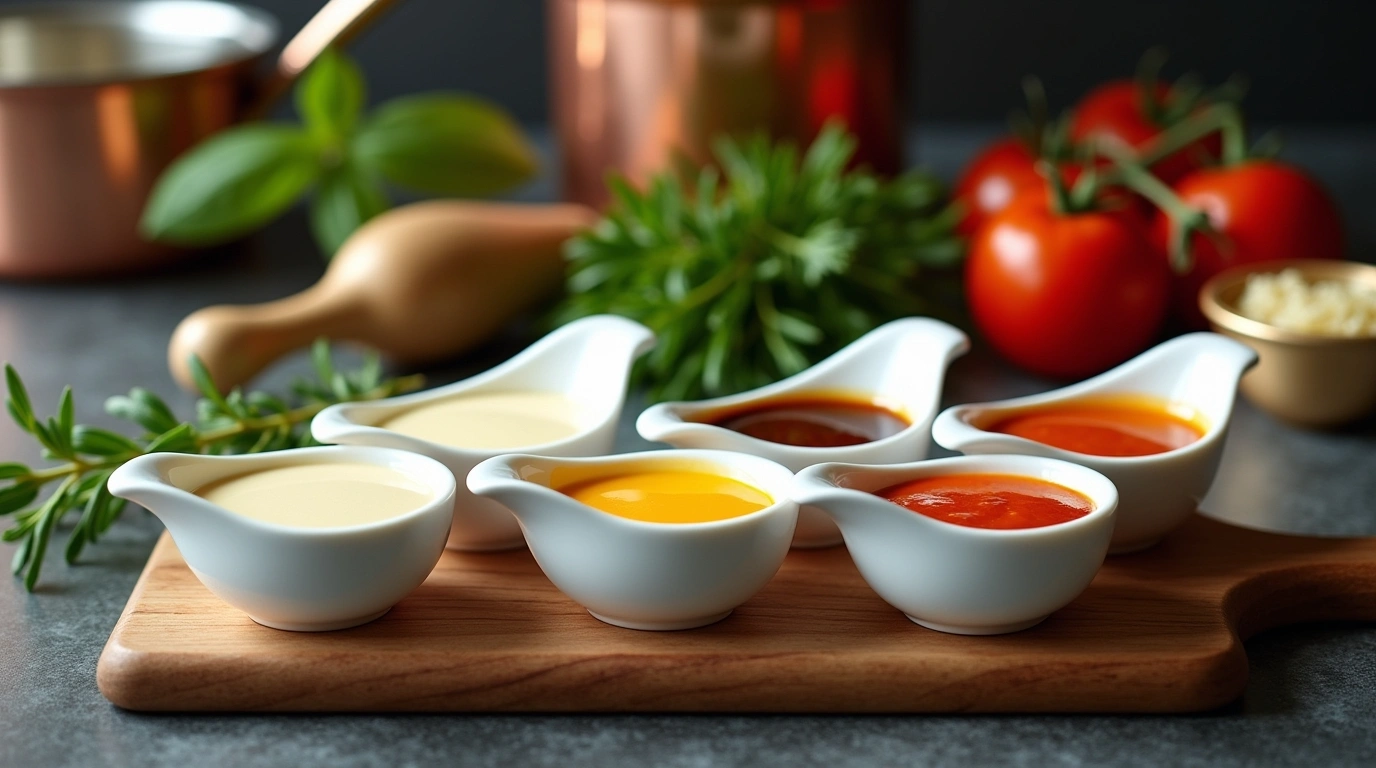
The five mother sauces are béchamel (white sauce based on milk), velouté (blonde sauce based on light stock), espagnole (brown sauce based on brown stock), hollandaise (emulsified butter sauce), and sauce tomate (tomato-based sauce). Each has its own character, its own technical challenges, and its own family of “daughter sauces” that extend from it.
What separates a good French sauce from a mediocre one? It’s rarely the ingredients—French cooking has always been about elevating the ordinary. It’s the technique, the patience, the understanding of how heat, fat, and liquid interact. A true French sauce should coat the back of a spoon with elegance, never overwhelming the dish it accompanies but enhancing every element on the plate.
The Philosophy Behind the Sauces
When I first learned French culinary techniques as a young cook, I was told: “A sauce is the soul of a dish.” This isn’t poetic exaggeration. In French gastronomy, the protein or vegetable is the body, but the sauce provides character, depth, and the finishing touch that makes a meal memorable. The French approach to sauces reveals something essential about our cuisine—we believe in building flavors layer by layer, respecting each ingredient’s contribution to the whole.
Béchamel: The Foundation of Comfort
Let me start with béchamel because it’s where most home cooks should begin their journey. This deceptively simple sauce—milk thickened with a roux of butter and flour—is the base for countless preparations. I’ve made thousands of béchamels in my career, and I still find satisfaction in watching the transformation from raw flour paste to silky, ivory sauce.
A proper béchamel sauce starts with equal parts butter and flour, cooked together to create a white roux. The key moment comes when you add warm milk—and here’s where technique matters. Add it gradually, whisking constantly. I learned this the hard way as an apprentice, creating lumpy disasters until my chef showed me the rhythm: add, whisk, wait for it to smooth, add more, whisk again.
The finished béchamel should be perfectly smooth, coating your whisk with a velvety layer. Season it simply with salt, white pepper, and a hint of nutmeg—just enough to awaken the palate without announcing its presence. This is what I mean about French restraint in seasoning: we enhance, we don’t dominate.
In French cooking, béchamel appears in classics like croque-monsieur, gratin dauphinois, and the Provençal brandade de morue. When you visit a traditional bistro in Lyon or Paris, chances are you’re tasting béchamel in at least one dish, even if you don’t realize it.
Velouté: The Elegant Blonde
Velouté is béchamel’s more sophisticated cousin. Instead of milk, we build it on a foundation of light stock—chicken, fish, or veal. The name means “velvety,” and that texture is everything. I remember working the sauce station at a three-star restaurant where the chef would test our velouté by running his finger across the back of the spoon. If it didn’t leave a clean line, back to the stove it went.
The technique mirrors béchamel: create a blonde roux (cooked just slightly longer than white roux), add warm stock gradually, simmer gently. But velouté demands more attention to seasoning because stock quality varies. A French fish stock (fumet de poisson) creates an entirely different sauce than a rich veal stock.
From velouté, we derive sauces like sauce suprême (enriched with cream and mushroom essence), sauce allemande (with egg yolk and lemon), and sauce normandy (with fish stock, cream, and mushrooms). Each derivative teaches you something about building complexity through careful additions.
The Stock Makes the Sauce
This is what separates a good French sauce from an exceptional one: the quality of your foundation. In traditional French kitchens, we maintain multiple stocks simmering throughout service. Home cooks can’t always do this, but understanding that your velouté is only as good as your stock is crucial. When I teach cooking classes, I always say: invest time in your stocks, and your sauces will sing.
Espagnole: The Deep, Dark Complexity
Sauce espagnole intimidates many cooks, and I understand why. It’s the most time-intensive of the mother sauces, requiring patience and a willingness to build flavors slowly. But master it, and you’ve truly entered the realm of classical French cuisine.
We start with a brown roux—cooked until it reaches a rich, nutty color—then add brown veal or beef stock, tomatoes, and a mirepoix of vegetables. The sauce simmers for hours, reducing, concentrating, developing that profound depth that characterizes the best French brown sauces. I’ve stood over pots of espagnole, skimming impurities, adjusting the heat, waiting for that moment when everything comes together.
The most famous derivative of espagnole is demi-glace, created by reducing espagnole with more stock until it reaches an almost syrupy consistency. A true demi-glace is liquid gold in French kitchens—it’s the base for sauce bordelaise, sauce madère, sauce périgueux. These are the sauces that accompany the finest meat dishes in traditional French restaurants.
When you taste a properly made sauce derived from espagnole at a restaurant in Bordeaux or Burgundy, you’re tasting hours of work, generations of technique, and a commitment to doing things the right way even when shortcuts exist.
Hollandaise: The Temperamental Beauty
Let’s talk about hollandaise, the sauce that has caused more kitchen anxiety than perhaps any other. It’s an emulsion of egg yolks and clarified butter, stabilized by gentle heat and constant whisking. I’ve watched experienced cooks break a hollandaise through simple inattention—too much heat, insufficiently whisked, butter added too quickly.
The French have a saying about hollandaise: “C’est une question de feeling”—it’s a question of feel. You must sense when the emulsion is forming, recognize the moment when you’re about to add too much butter, understand when the heat is threatening to scramble your yolks. This intuition comes from experience, from making it wrong before you make it right.
A perfect hollandaise sauce is thick enough to coat asparagus or Benedict eggs without sliding off, yet light enough that it doesn’t feel heavy. The flavor should whisper of butter and lemon, with just enough acidity to cut through richness. Season it carefully—a touch too much lemon juice and you’ve destroyed the balance.
The derivative sauces from hollandaise include béarnaise (with tarragon and shallots—my personal favorite for grilled beef), sauce mousseline (lightened with whipped cream), and sauce choron (béarnaise with tomato). Each variation shows how a change in aromatics or additions can create entirely new flavor profiles from a single base.
Sauce Tomate: The Mediterranean Soul
The fifth mother sauce, sauce tomate, might seem simple—it’s tomatoes, after all. But a proper French tomato sauce differs significantly from Italian approaches. We build it on a foundation of roux, add pork belly or bacon for depth, include aromatic vegetables, and simmer until the sauce develops a refined, concentrated character.
I grew up in Bordeaux, not exactly tomato country, but I learned to appreciate French tomato sauce during stages in Provence, where late summer tomatoes transform into sauces that capture sunshine in a pot. The technique involves sweating vegetables, adding tomato and stock, seasoning carefully with herbs like thyme and bay leaf, then simmering patiently.
This sauce appears in dishes like œufs à la provençale, various gratins, and as a base for more complex preparations. It’s the most forgiving of the mother sauces, which makes it perfect for home cooks beginning their French cooking journey.
Mastering the Techniques: What I Wish I’d Known Earlier
Throughout this french sauces masterclass, technique threads through everything. Let me share what I learned through trial, error, and occasionally, disasters.
Temperature control is everything. Too high, and you’ll curdle hollandaise or burn roux. Too low, and your reduction takes forever. Medium-low heat becomes your friend. I tell students: “If you think you’re cooking too slowly, you’re probably cooking at the right speed.”
Whisking rhythm matters. There’s a meditation in the consistent whisking required for sauces. Your arm might tire, but consistency prevents lumps and ensures proper emulsification. I’ve developed a rhythm over decades—steady, circular, thorough.
Tasting and adjusting separates good from great. A sauce is never finished until you’ve tasted it multiple times, adjusting seasoning gradually. This is what separates a good French sauce from an exceptional one: the willingness to taste, consider, adjust, and taste again.
Using French Sauces in Classic Dishes
Understanding these French culinary sauces transforms how you experience French dining. When you order sole meunière with beurre blanc (derived from hollandaise principles), you’re tasting generations of refinement. Coq au vin with its rich red wine reduction based on espagnole techniques tells a story of Burgundian cooking traditions.
In bistros throughout France, you’ll encounter these mother sauces and their derivatives constantly: blanquette de veau relies on velouté enriched with cream and egg yolk; steak au poivre showcases a cream sauce built on reduction and pan drippings; gratin de chou-fleur uses béchamel as its creamy foundation.
When planning your culinary exploration of France, seek out traditional establishments where these sauces still receive proper attention. In Paris, classic bistros like Le Comptoir du Relais or Allard maintain these traditions. In Lyon, the bouchons serve sauces that haven’t changed in generations. In Bordeaux, seek out restaurants specializing in entrecôte bordelaise, where sauce bordelaise shows what espagnole-based sauces can achieve.
The Modern Evolution
While I deeply respect classical technique, French cuisine evolves. Modern chefs lighten sauces, reduce butter content, experiment with contemporary emulsifiers and thickeners. Some purists resist this evolution, but I’ve learned that honoring tradition doesn’t mean refusing to adapt.
The fundamental principles of this french sauces masterclass remain relevant: building flavor through proper technique, respecting ingredients, balancing richness with acidity, creating harmony on the plate. Whether you’re making a classical sauce espagnole or a lighter, modern interpretation, these principles guide you.
Your Sauce Journey Begins
This french sauces masterclass provides the foundation, but true understanding comes from practice. Start with béchamel—make it ten times until your muscle memory knows the right consistency. Move to hollandaise when you’re ready for a challenge. Graduate to espagnole when you want to commit a Sunday afternoon to your craft.
The beauty of mastering French sauces extends beyond French cooking. These techniques inform how you approach any sauce, in any cuisine. Once you understand emulsification, roux-thickening, and reduction, you think differently about building flavors in all your cooking.
I encourage you to view these sauces not as intimidating classical preparations, but as living techniques that connect you to generations of French cooks. Every time you whisk a hollandaise or reduce an espagnole, you’re participating in a tradition that values craftsmanship, patience, and the pursuit of deliciousness.
Bon courage, and remember: even professional chefs break hollandaises occasionally. The difference is, we know how to fix them, and we keep whisking.
Further Reading and Resources
To explore the historical development of French sauces and Escoffier’s contributions, visit The French Culinary Institute’s archives.