
Budget Travel France: Best Practical Guide To Real Costs
Planning budget travel France isn’t just about skipping expensive cafes or museums. If you want to actually see France, city-hop, explore, and avoid surprise fees, you need hard numbers, clear tactics, and realistic benchmarks. This guide breaks down costs by day and category—so you can plan, tweak, and control your trip spend, not just hope for cheap luck.
Key Takeaways
- Budget travel in France (2024) costs €80–107/day with conscious choices on food, sleep, and transport.
- Hostels and buses are your best friends for affordable accommodation in France and getting between cities.
- Booking trains at least a month in advance, using under-26 discounts, and hitting the shoulder season unlock big savings.
- How much does budget travel in France actually cost?
- Daily budget breakdown — accommodation, meals, transport, attractions
- Where to sleep: cheapest regions & how to find affordable accommodation
- Most cost-effective ways to get around France (long-distance and local)
- Insider booking hacks that actually save money
- Free and very low-cost things to do in popular cities
- Biggest complaints & pitfalls budget travelers face — and how to avoid them
- Off-season vs. peak season — when to go to save the most
- Sample itineraries with 3 budget tiers (strict, flexible, mid-budget)
- Quick checklist & resources (bookings, city passes, apps)
How much does budget travel in France actually cost?
For 2024, budget travel France means planning for €80–107 per day. That’s for real travelers—not only those living off bread and tap water, but those who actually see and do things. Here’s what’s included in this range:
- Sleep (dorm bed, cheapest Airbnb shared room, or campsite): €15–40
- Food (groceries/some cheap meals out): €15–30
- Local transport (metro/trams or intercity bus segment): €5–10
- Attractions & extras (museums, tours, random fun): €10–30
Mid-range travelers (private rooms, more eating out, guided activities) spend €175–305/day. Stay budget by mixing free sights, hostels, and buses—especially if you’re flexible with location and travel season.
If you’re planning a 14-day trip, expect a baseline of €1100–1500. Or for a strict week, you could get by on €600–700 with discipline and smart choices.
Daily budget breakdown — accommodation, meals, transport, attractions
It’s simplest to break your spend into four main chunks. See where you can stretch or shrink:
| Expense | Strict Budget | Typical Budget | Mid-Range |
|---|---|---|---|
| Accommodation | €15–25 (camping/dorm) | €40–75 (hostel/Airbnb shared) | €85–150 (private/2-star hotel) |
| Meals | €10 (groceries only) | €20–25 (mix of supermarket & street food) | €40+ (cafes/restaurants/occasional splurges) |
| Local Transport | €5 | €7–10 | €15+ (taxis, Ubers, flexible) |
| Attractions | €5 (free museums/tours/parks) | €15–30 | €30–60 |
Example Budget Day (City-Hopping)
- Hostel bunk in Lyon: €42
- Breakfast baguette + café & market lunch: €9
- Evening falafel or supermarket dinner: €8
- Public transit rides (3): €6.50
- Free riverside walk/town explorations: €0
- Museum student ticket: €6
- Total: €71.50
Where to Cut Your Costs
Cook own food; choose dorms or campsites; do more free activities (see below); buy city passes only if you’ll actually use them (run the numbers).
Where to sleep: cheapest regions & how to find affordable accommodation
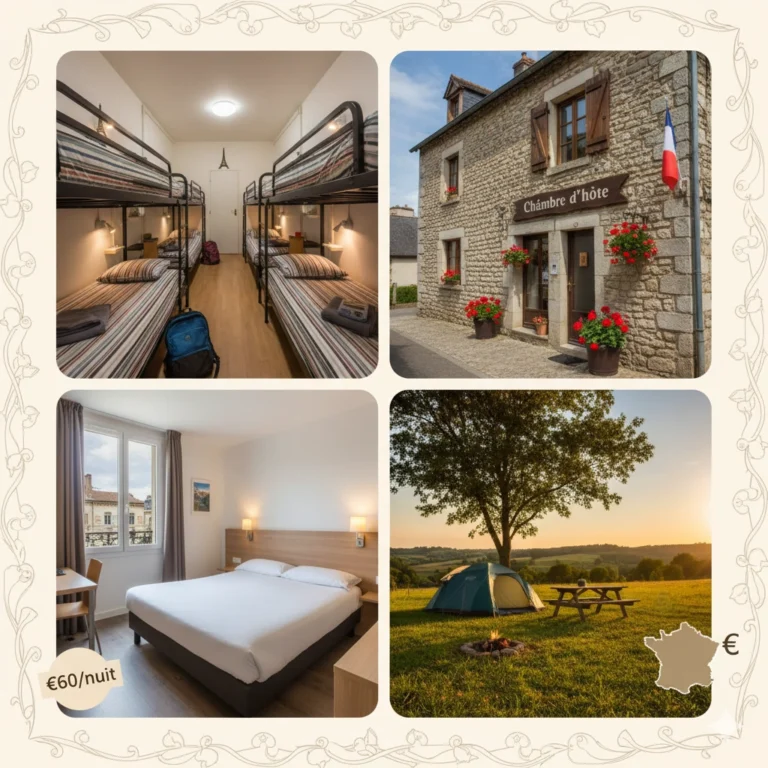
The price to sleep in France varies wildly by city and season. Affordable accommodation in France is easier outside Paris and the Côte d’Azur, and gets much better in student cities (Montpellier, Grenoble, Lille) and mid-size towns. Even in Paris, dorms and shared Airbnb rooms are your side door to savings.
| Type | Paris | Other Regions (Est.) |
|---|---|---|
| Hostel Dorm | €40–75 | €25–55 |
| Budget Hotel (2*) | €85–150 | €55–100 |
| Airbnb Private Room | €45–90 | €32–65 |
| Campsite (Tent) | €25+ | €18–25 |
Note: In summer (June–August), prices spike 30–50%. Hostels in Paris fill up first; smaller cities have less competition and lower prices, especially outside school holidays. Always check reviews for neighborhood safety and transport access.
For solo or duo travelers, hostel dorms and well-rated shared Airbnbs are almost always the cheapest safe bets. If in a friend group, private Airbnb apartments can sometimes beat hostels—run the math.
How to Find Cheap Beds
- Check hostel reviews for surprise fees (linen, lockers, tourist tax)
- Filter Airbnb/Booking for shared rooms and “entire apartment” only if splitting cost
- Look for properties outside old towns or tourist centers—walk 5–20 minutes and save €15–40/night
- If camping: France has a huge network (look for “Camping Municipal” for cheapest, cleanest spots)
Paris prices are heavily covered online, but each region changes: in Rennes, Limoges, or Clermont-Ferrand, expect at least 25% less than major metros.
Most cost-effective ways to get around France (long-distance and local)
Transport eats your wallet fast if you’re not strategic. Here’s how budget transportation France really works:
| Transport Mode | Typical Price | Booking Tips | Pros/Cons |
|---|---|---|---|
| Bus (Flixbus/Blablabus) | Paris–Marseille: €20–35 Paris–Strasbourg: €15–25 Paris–Bordeaux: €18 |
Book 2–4 weeks ahead for best deals | Cheapest; slowest; limited late travel |
| Train (SNCF) | Paris–Nice: €38 advance (€70–150 last-minute) Paris–Strasbourg: €32 advance (€85–130 last-minute) |
Buy 30+ days early; youth (–26) get discounts | Fastest; price jumps last-minute |
| Budget Airline (Transavia, easyJet) | Average: €60 one-way Shoulder: €25–35 |
Book ~6+ weeks ahead; only with small carry-on | Works for select routes; baggage fees steep |
| Local Transit | Paris metro/re RER: €2.50/ride; €12/day; week: ~€32 | Passes pay off after 4+ rides/day | Extensive in cities; look for passes, not single tickets |
- For long distances, bus is usually cheapest; book night buses to save both on time and one night’s accommodation.
- High-speed trains (TGV) are fastest but only cheap far in advance; always check 2nd class and “Prem’s” fares.
- Budget airlines are only worthwhile with a small bag and if booked on a promo fare in shoulder/off-peak.
- Check regional “TER” slow trains for local routes where buses aren’t available—they can be affordable with youth or group discounts.
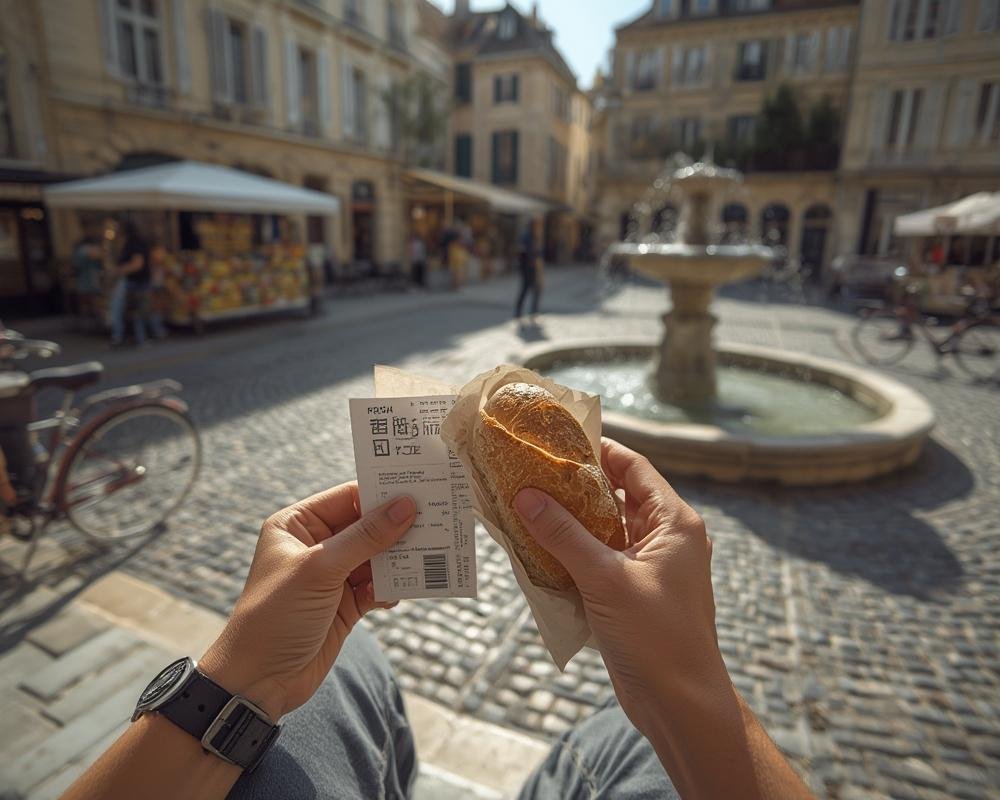
Watch for luggage charges:
Budget airlines in France don’t include checked luggage—you’ll pay €20–40 each way unless you’re strictly carry-on. Buses and trains are friendlier (but check if Flixbus includes only 1 bag for your fare).
How to travel France on a budget for transport: Book “legs” earlier, travel mid-week for best rates, and sign up for bus and airline deal notifications.
Insider booking hacks that actually save money
- Book train tickets at least a month early: Significant savings kicked in at this window according to traveler data.
- Under 26? Always select “youth”/”Jeune” fares on SNCF and Ouigo—even non-French residents get these discounts.
- Opt for overnight buses: Flixbus’s “red-eye” lines between Paris, Bordeaux, Marseille, Nice save both transit and bed euros.
- Carry-on only for flights: Even “cheap” Ryanair, Transavia, and easyJet add €30+ per checked bag. If you need to check a bag, bus or train is nearly always better.
- Local transport passes: In Paris, €12 for day-unlimited or under €32 for the week, versus €2.50 per ride. Other cities also offer day and week cards—ask at the transit desk when you land.
- For more savings, travel in groups of 2–4: apartments and car shares get much cheaper, especially outside Paris.
Don’t skip fine print—the cheapest listings often hide cleaning fees or city taxes at checkout. Scan hostel/Airbnb/booking.com reviews for anything about “unexpected extra charges.”
Free and very low-cost things to do in popular cities
Finding free things to do in France is easier than you think—especially with a little research ahead. Here’s the best by city as of 2024:
Paris
- Wander the banks of the Seine (especially at sunset); picnic at Parc des Buttes-Chaumont or Parc des Buttes-Chaumont.
- First Sunday of the month: free entry to top museums (Louvre, Musée d’Orsay, Centre Pompidou — check dates online as some are only Nov–Mar).
- Explore Montmartre—visit Basilica Sacré-Cœur (entry is free, pay for the dome).
- Free walking tours (tip-based, so bring coins)—look for “Paris Greeters” or Sandemans.
Lyon
- Wander Vieux Lyon and traboules (secret passageways, open to public)
- Walk or cycle up Fourvière Hill for panoramic city views
- Sunday markets along the Saône—fresh produce, street music, people-watching
- Roman ruins at Fourvière (open park, often free concerts in summer)
Marseille
- Old Port stroll and people-watching
- Swim or sun in Les Catalans beach (city access, no fee)
- Noailles Market: multicultural food and color, free atmosphere
- Climb to Notre-Dame de la Garde (free entry, city views)
Nice
- Promenade des Anglais: world-famous seaside walk
- Parks and gardens: Castle Hill (Colline du Château) has the Côte d’Azur’s best free lookout
- Take a dip at Plage Publique de Beau Rivage (pebble beach; bring your own towel)
- Self-guided walking tours of old town—download city’s tourist app for free
For the latest, always check municipal tourist websites before your trip—dates and free events can change by season. Most cities also offer downloadable guides listing current no-fee happenings and student discounts.
Biggest complaints & pitfalls budget travelers face — and how to avoid them

Being cheap in France isn’t always smooth sailing. There are real traps worth knowing before you book:
| Problem | Details / Prevention |
|---|---|
| Hidden Fees | Hostels/Airbnbs add for sheets, cleaning, or luggage storage. Always check listing details and recent reviews. |
| Luggage Restrictions | Budget airlines enforce bag weight/sizes. Buses include only one suitcase. Trains are most forgiving. |
| Last-Minute Bookings | Ultra-high or no availability—especially Paris, Nice, and peak weekends. Always reserve key transport and beds at least 2–6 weeks in advance. |
| Seasonal Price Spikes | Summer prices climb 30–50%. Try May/September for most places—warm weather, less crowd, lower cost. |
| Crowded “Cheap” Options | Night buses and dorm hostels get noisy and fill with larger groups. Bring earplugs, eye mask, and check-in early for best bunk choices. |
| Service Variability | Some budget hotels and dorms can be hit-or-miss: check ratings updated within the last 3 months. |
Don’t rely on finding things last minute in big cities—always reserve anything crucial at least 1–2 weeks out, way more in summer. If traveling during strikes (common in France), check French news and allow extra time for all connections.
Off-season vs. peak season — when to go to save the most
If you want to know how to travel France on a budget and get the best prices, aim for November–March (off-season) or late April–May & September–early October (shoulder season). Here’s how the calendar affects your wallet:
- Accommodation: Summer (June–August) = 30–50% price increase even in cheapest dorms and campsites. Consider late spring or early fall when weather’s still good.
- Transport: Buses stay fairly flat, but trains and flights jump 50–100% (unless booked far ahead).
- Budget Airlines: Drop to €25–35 one-way during shoulder season; typical is €60+ at other times.
Trade-offs: Colder months mean shorter days and possible museum closures/schedule reductions, especially in rural France or small towns. Southern coast stays mild; mountain areas may have snow travel issues but great for low-crowd city trips.
For major cities, November and January are the quietest and the cheapest. Easter/spring break draws families; avoid those weeks unless you book months early.
Sample itineraries with 3 budget tiers (strict, flexible, mid-budget)
Below you’ll find sample plans—pick your length, style, and tweak as needed (costs = 2024 estimates):
| Trip | Strict Budget (€80/day) |
Mid-Budget (€107/day) |
Flexible/Mid-Range (€175–305/day) |
|---|---|---|---|
| 7 Days Paris + Day Trips | €560 Dorm beds, supermarket food, one day pass for Paris transport, one outside day trip on a bus, most sights free/discount. |
€749 Mixed dorm/private room, 2 meals out, guided tour, local SIM, train to Chartres/Versailles. |
€1225–2135 Private/Boutique rooms, all meals out, high-speed trains, multiple paid experiences. |
| 10 Days Southern France Loop (Nice–Avignon–Marseille) | €800 Hostels, buses between cities, beach and free cultural sites, light cooking. |
€1100 Mix dorm/Airbnb, regional trains, local café meals, day boat tour. |
€1750–3050 Hotel rooms, TGV or hire car, private tours, dinners out. |
| 14 Days North–South Rail Itinerary (Paris–Lyon–Avignon–Marseille–Nice) | €1120 Low-cost train fares (booked ~30 days ahead), mostly hostels, mostly free/discount attractions. |
€1498 Mix of dorm and private rooms, a couple guided experiences, mid-range trains, shared transfers. |
€2450–4270 All private rooms, TGVs last-minute, premium activities, no food budget constraints. |
Tip:
If you’re super strict, you can get by below €80/day—only with hard discipline and skipping most “paid” fun (and traveling outside summer).
Quick checklist & resources (bookings, city passes, apps)
Don’t leave savings on the table because you forgot a simple step. Here’s your action-ready pre-trip checklist for budget transportation France and affordable accommodation in France:
- Book all long-distance trains/buses at least 30 days ahead (earlier during holiday/peak/summer)
- Reserve first and last night’s accommodation—fill in rest according to flexibility/comfort
- Research city/local transport passes—Paris’ Navigo Découverte, Lyon’s TCL card, Marseille RTM pass etc.
- Install key travel apps: SNCF Connect (trains), Flixbus, Citymapper, Google Maps (offline maps), Hostelworld, Airbnb, Oui.sncf
- Check for youth/under-26 cards at main train station desks across France
- Always compare full price (plus cleaning/tourist/linen fees) before confirming Airbnb or hostel bookings
Transport pass reference: Paris: single metro/RER €2.50, one day unlimited: €12, one week (Navigo): just under €32.
Pack an actual padlock for hostels, a small towel, and universal plug adapter to avoid on-the-ground surprises.
Your budget decisions start before you book: plan out high-cost legs, decide what’s non-negotiable, and build flexibility around the rest.
Conclusion: Budget travel France made real & actionable
To sum up—budget travel France is completely within reach if you’re ready to think ahead, jump on early train/bus deals, and work hostel dorms, free city activities, and the low season to your advantage. The big challenge is detail: know your real costs, plan your moves, and always double-check for hidden extras. Book early, travel light, and enjoy more for less.
Start your budget trip plan now—book your essential transport and first nights early to be sure you land under budget. Safe travels and bon voyage!
FAQ: Budget travel France—Your top questions answered
How much should I budget for a week in France as a backpacker?
If you stick to hostel dorms, local food, buses, and free activities, expect €80–107 per day—so about €600–749 for 7 days. Factor in a little extra for occasional treats or surprises.
What’s the cheapest way to get from Paris to Nice or Marseille?
Buses are consistently the cheapest (€20–38 if booked ahead, but 10–15 hours). SNCF trains booked 30+ days in advance get you there in half the time (€32–48). Last-minute, both options get more expensive. Budget airlines sometimes lower, but luggage and airport transfer costs add up quickly.
How do I avoid hidden fees in French hostels and Airbnbs?
Always read the fine print: bedding/linen, cleaning fees, city tax, and luggage storage are sometimes listed last-minute. Scan recent guest reviews—guests flag hidden charges right away.
Is it safe and practical to use overnight buses in France?
Overnight buses (like Flixbus or Blablabus) are generally safe and a real budget win—they combine your hostel and transport cost for the night. Bring earplugs/eye mask and book as early as possible for promos and seat selection.
What’s the best season to visit France for the lowest prices?
November–March is the true off-season and offers the lowest transport and accommodation prices (except Christmas/NYE). Shoulder months like May and September are also much cheaper than summer but have better weather and more open attractions.