Loire Valley Châteaux Guide: Must-Visit French Castles
The Loire Valley châteaux represent one of France’s most magnificent collections of Renaissance palaces and medieval fortresses, stretching along the scenic Loire River through central France. This UNESCO World Heritage region, often called the “Garden of France,” boasts over 300 châteaux that showcase centuries of French royal history, architectural innovation, and artistic brilliance. From the fairy-tale spires of Château de Chambord to the elegant gardens of Château de Villandry, each castle tells a unique story of French nobility, political intrigue, and cultural refinement that continues to captivate millions of visitors annually.
Exploring the Loire Valley Châteaux
The Loire Valley serves as an open-air museum of French architecture, where each château represents a different era and architectural style. These magnificent structures evolved from medieval fortresses into luxurious Renaissance palaces as the French court moved between various royal residences. The châteaux became symbols of power, wealth, and artistic patronage, attracting the finest architects, artists, and craftsmen from across Europe.
The Golden Age of French Renaissance Architecture
During the 15th and 16th centuries, French kings and nobles transformed the Loire Valley into their preferred playground, commissioning elaborate châteaux that blended Italian Renaissance influences with traditional French architectural elements. This period marked the transition from purely defensive medieval castles to ornate pleasure palaces designed for comfort, entertainment, and displaying wealth.
The architectural evolution reflects broader cultural changes in French society, as the nobility shifted from warfare to courtly life. These châteaux became centers of learning, artistic patronage, and political maneuvering, hosting elaborate festivals, theatrical performances, and diplomatic gatherings that shaped European history.
Must-Visit Loire Valley Châteaux
Château de Chambord: The Crown Jewel
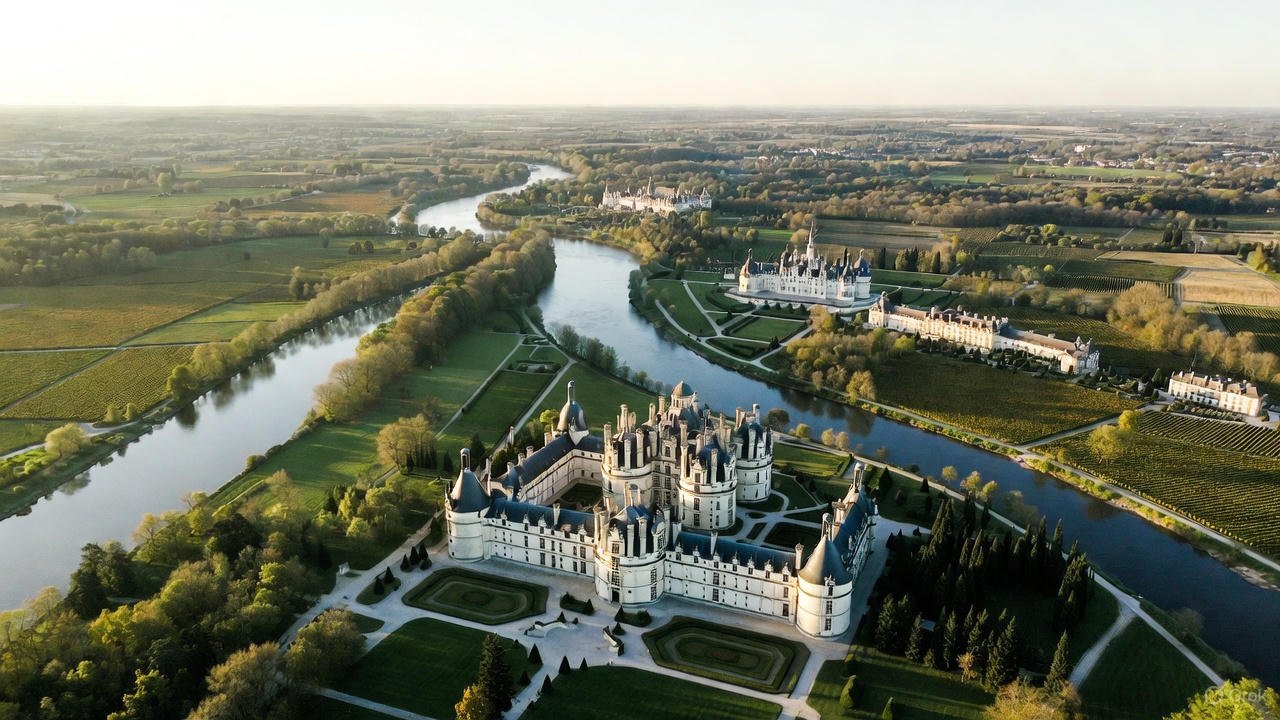
Château de Chambord stands as the most recognizable and architecturally ambitious castle in the Loire Valley. Commissioned by King François I in 1519, this masterpiece features 440 rooms, 282 fireplaces, and 77 staircases, including the famous double-helix staircase attributed to Leonardo da Vinci’s influence.
The château’s distinctive French Renaissance architecture combines Italian decorative elements with traditional French medieval forms, creating a unique silhouette that dominates the surrounding forest. The elaborate rooftop terrace offers visitors spectacular views while showcasing the château’s intricate collection of chimneys, towers, and ornamental features.
Chambord’s massive scale required nearly 30 years of construction and employed thousands of craftsmen, making it one of the most expensive building projects of its era. The château’s design reflects François I’s ambitions to rival other European monarchs and establish France as a center of Renaissance culture and artistic innovation.
Château de Chenonceau: The Ladies’ Castle
Château de Chenonceau, elegantly spanning the Cher River, earned its nickname “the Ladies’ Castle” due to the influential women who shaped its history and design. Built in 1514 on the foundations of an old mill, the château features the iconic arched bridge gallery that extends across the water, creating one of France’s most photographed architectural scenes.
The castle’s history intertwines with remarkable women including Diane de Poitiers, Henri II’s mistress, and Catherine de’ Medici, who transformed the property into a center of political power and cultural refinement. Their rivalry and successive ownership created the château’s unique character and established traditions that continue today.
Chenonceau’s interior showcases exceptional period furnishings, tapestries, and artwork, while the meticulously maintained gardens reflect different stylistic periods. The château’s location over water provided both practical advantages for defense and transportation, and aesthetic benefits that make it uniquely beautiful among Loire Valley castles.
Château de Villandry: Gardens of Perfection
Château de Villandry represents the pinnacle of French formal garden design, featuring elaborate geometric patterns created with precisely manicured hedges, colorful flowers, and ornamental vegetables. Built in 1536, the château itself showcases excellent Renaissance architecture, but the gardens truly distinguish this property from other Loire Valley châteaux.
The gardens encompass several distinct areas, including ornamental gardens featuring intricate love-themed patterns, water gardens with reflecting pools and fountains, and decorative vegetable gardens that demonstrate the artistic potential of practical horticulture. Each section requires meticulous maintenance by skilled gardeners who preserve centuries-old traditions.
Visiting Villandry provides insight into the sophisticated lifestyle of French nobility and their appreciation for combining beauty with functionality. The château’s restoration in the early 20th century by Dr. Joachim Carvallo returned the property to its original Renaissance splendor and established modern standards for historical garden preservation.
Château d’Amboise: Royal Birthplace
Château d’Amboise holds special significance as the birthplace and childhood home of King Charles VIII and the final resting place of Leonardo da Vinci, whose tomb lies in the château’s Saint-Hubert Chapel. This royal residence played crucial roles in French history and cultural development during the Renaissance period.
The château’s strategic position overlooking the Loire River provided excellent defensive advantages while offering spectacular views across the valley. The surviving structures represent only a portion of the original complex, which once ranked among Europe’s largest and most magnificent royal palaces.
Da Vinci spent his final years at nearby Clos Lucé, connected to Château d’Amboise by underground tunnels, allowing the aging genius to collaborate closely with King François I on various artistic and engineering projects. This relationship symbolizes the broader cultural exchange between Italian Renaissance masters and French royal patronage.
Planning Your Loire Valley Château Adventure
Transportation Options
Loire Valley travel requires careful planning to maximize your château visits while minimizing transportation challenges. Most visitors choose between rental cars, organized tours, or cycling routes, each offering distinct advantages depending on your preferences and schedule.
Rental cars provide maximum flexibility for exploring multiple châteaux at your own pace, accessing smaller properties, and venturing into surrounding villages and vineyards. The well-maintained road network connects all major châteaux, with clear signage and ample parking at most locations.
Organized tours eliminate navigation concerns while providing expert commentary about château history and architecture. Many tour companies offer full-day or multi-day packages that include transportation, entrance fees, and sometimes meals at château restaurants or nearby establishments.
Cycling represents an increasingly popular option, with dedicated bike paths connecting many châteaux through scenic countryside. Several companies offer bike rentals and self-guided tour packages that combine château visits with leisurely rides through vineyards and historic villages.
Accommodation Strategies
The Loire Valley offers diverse accommodation options ranging from château hotels to charming bed-and-breakfasts, allowing visitors to extend their historical immersion beyond daytime château visits. Staying in converted châteaux provides unique opportunities to experience French nobility’s lifestyle firsthand.
Château hotels like Château de Noizay and Château de Rochecotte offer luxury accommodations within authentic historical settings, complete with period furnishings, fine dining restaurants, and extensive grounds for relaxation. These properties often provide special access to nearby châteaux or insider tours not available to general visitors.
Traditional hotels in major towns like Tours, Amboise, and Blois provide convenient bases for day trips while offering modern amenities and restaurant options. These locations also feature local attractions, shopping opportunities, and evening entertainment beyond château visits.
Rural bed-and-breakfasts and gîtes offer authentic French hospitality while providing insights into contemporary Loire Valley life. Many hosts possess extensive local knowledge and can recommend lesser-known châteaux, excellent restaurants, or special events that enhance your visit experience.
Seasonal Considerations
Each season offers unique advantages for château visits in France, from spring garden blooms to autumn harvest celebrations. Understanding seasonal variations helps visitors choose optimal timing for their Loire Valley adventure.
Spring (April-May) provides ideal weather for garden exploration, with mild temperatures and spectacular flower displays at properties like Villandry and Chenonceau. This period also features fewer crowds than peak summer months while offering extended daylight hours for château visits.
Summer (June-August) brings peak tourist season with longest days, warmest weather, and full château operating schedules. However, popular properties experience significant crowds, higher prices, and parking challenges during this period.
Autumn (September-October) offers comfortable temperatures, beautiful foliage, and harvest-related activities at château properties and surrounding vineyards. Many châteaux host special events during this period, including wine tastings, concerts, and historical reenactments.
Winter visits provide unique opportunities to experience châteaux in quiet, atmospheric conditions with special holiday decorations and events. While some properties reduce operating hours or close entirely, major châteaux remain accessible and offer cozy fireplaces and seasonal programming.
Architectural Marvels and Historical Significance
Renaissance Innovation and Design
Loire Valley châteaux showcase the transition from medieval fortress architecture to Renaissance palace design, demonstrating how changing social conditions influenced architectural evolution. Early châteaux prioritized defense with thick walls, narrow windows, and strategic positioning, while later constructions emphasized comfort, light, and decorative elements.
The integration of Italian Renaissance principles with traditional French construction techniques created the distinctive architectural style that defines Loire Valley châteaux. Features like elaborate staircases, large windows, decorative pilasters, and ornate rooflines became signature elements that influenced French architecture for centuries.
Master architects like Pierre Nepveu at Chambord and Philibert de l’Orme at various properties introduced innovative engineering solutions and artistic concepts that pushed architectural boundaries. Their work established new standards for palace construction and influenced architectural development throughout Europe.
Historical Figures and Political Intrigue
The châteaux served as stages for significant historical events, royal celebrations, political negotiations, and cultural achievements that shaped French and European history. Understanding these historical connections enhances appreciation for the architectural and artistic elements visible today.
Royal residents like François I, Henri II, Catherine de’ Medici, and Louis XIV each left distinctive marks on various châteaux through architectural additions, garden modifications, or cultural programming. Their personal tastes and political objectives influenced construction decisions and artistic commissions that define each property’s character.
Political events ranging from diplomatic summits to royal marriages took place within château walls, creating historical layers that contribute to each property’s significance. Many châteaux display portraits, documents, and artifacts that illustrate these connections and help visitors understand broader historical contexts.
Practical Tips for Château Enthusiasts
Ticket Strategies and Cost Management
France castle tours can become expensive quickly, but various money-saving strategies help budget-conscious travelers maximize their château experiences. Many properties offer combination tickets, annual passes, or group discounts that significantly reduce per-visit costs.
The Loire Valley Château Pass provides access to multiple properties at discounted rates while offering additional benefits like priority entry and special exhibitions. This option works particularly well for visitors planning to see four or more châteaux during their stay.
Individual château websites often feature advance purchase discounts, especially during off-peak seasons. Booking online also guarantees entry during busy periods when popular properties may reach capacity limits.
Some châteaux offer free or reduced admission on specific days, particularly for EU residents under 26 or during special cultural events. Checking individual château websites before your visit can reveal these opportunities.
Photography and Documentation
Most Loire Valley châteaux permit photography in public areas, though flash photography and tripods may be restricted in interior spaces. Understanding photography policies helps visitors capture memories while respecting preservation requirements and other visitors’ experiences.
Professional photography often requires special permits and may incur additional fees. Wedding photographers and commercial operators should contact châteaux directly to arrange appropriate permissions and understand any restrictions on equipment or timing.
Social media sharing has become increasingly popular, with many châteaux encouraging visitors to share experiences using specific hashtags. Some properties even feature visitor photographs in their promotional materials or social media accounts.
Sketching and painting remain welcome activities at most châteaux, with some properties providing special programs for artists or art students. These activities often attract less attention than photography while creating meaningful personal mementos of your visit.
Culinary Experiences and Local Culture
Château Dining and Wine Tasting
Many Loire Valley châteaux feature restaurants or cafés that provide opportunities to experience French château cuisine while extending your visit. These establishments often emphasize local ingredients, traditional recipes, and wines from surrounding vineyards.
Château restaurants typically occupy historically significant spaces like former servants’ halls, orangeries, or garden pavilions, adding atmospheric elements to dining experiences. Menus often reflect seasonal availability and regional specialties that complement the château visit experience.
Wine tastings at château properties or nearby vineyards provide insights into Loire Valley viticulture and its connections to château history. Many noble families maintained extensive vineyards that supplied their households and provided income for château maintenance.
Local wine varieties like Sancerre, Muscadet, and Chinon offer distinctive flavors that reflect the region’s terroir and winemaking traditions. Understanding these connections enhances appreciation for the integrated agricultural and architectural landscape that defines the Loire Valley.
Regional Festivals and Cultural Events
The Loire Valley hosts numerous festivals and cultural events throughout the year that provide additional contexts for understanding château history and contemporary regional culture. These events often feature period costumes, historical reenactments, and traditional crafts demonstrations.
Summer sound and light shows at major châteaux like Chambord and Chenonceau combine historical narratives with spectacular visual effects projected onto château facades. These evening events provide dramatic alternatives to daytime visits while highlighting architectural details and historical stories.
Renaissance festivals and medieval reenactments allow visitors to experience château life as it might have appeared during different historical periods. Participants often demonstrate period crafts, cooking techniques, and entertainment that bring château history to life.
Classical music concerts in château settings provide unique cultural experiences that showcase the acoustic properties and atmospheric qualities of these historical spaces. Many châteaux maintain regular concert schedules featuring both period music and contemporary performances.
The Loire Valley châteaux represent an unparalleled collection of architectural masterpieces that continue to inspire and educate visitors about French history, culture, and artistic achievement. From the grandest royal palaces to intimate manor houses, each château offers unique insights into the sophisticated world of French nobility and their lasting contributions to European civilization. Planning a comprehensive château tour requires careful consideration of transportation, accommodation, and timing, but the rewards include unforgettable experiences that connect visitors with centuries of human creativity and cultural refinement.
For additional planning resources, visit the official Loire Valley tourism website for detailed historical and cultural background information.