
French Culture and Etiquette: A Cultural Translator’s Guide to Navigating France with Grace
French culture and etiquette shape every interaction for travelers in France. Respecting these social norms is more than just avoiding embarrassment; it directly impacts first impressions, how you’re treated in restaurants, shops, and social circles, and whether your trip feels seamless or awkward. This evidence-backed, practical guide breaks down the must-know French etiquette rules, exposes what research truly covers, and points out information gaps so you can navigate uncertainty and avoid common faux pas confidently.
Key Takeaways
- Small etiquette lapses, like skipping greetings, often cause social friction but rarely lead to legal trouble.
- Many etiquette “rules” differ by context, region, or age—yet few studies map these differences clearly.
- Exact phrases, proactive observation, and avoiding over-assumptions can eliminate most traveler mistakes.
- Why French culture and etiquette matter for travelers
- Top common faux pas foreigners make in France
- Nuances people get wrong: Tu vs Vous — when to use each
- La bise and personal space — how to initiate and when to hold back
- Dining etiquette made practical (ordering, paying, table manners)
- Greetings, goodbyes and small talk: exact phrases and timing
- Dress, volume and public behavior — what “looking French” often means
- Three advanced etiquette tips most competitor posts miss (deep dives)
- What we don’t know (important data gaps readers should be aware of)
- Regional, socio-economic and age variations — what to expect and how to adapt (practical guidance despite data gaps)
- Traveler frustrations from forums & communities (synthesis + call for primary research)
- Official/Expert guidance (2023–2024) and post-pandemic/digital changes — what exists and what’s new
- Consequences of breaching key customs — social and (rare) legal outcomes
- Practical pre-trip checklist and one-page quick phrases to memorize
- Sources, recommended next steps for deeper research, and editorial notes
Why French culture and etiquette matter for travelers
Every interaction in France begins with a subtle checklist: Did you say “Bonjour” when entering? Are you speaking at a considerate volume? Will you greet staff or strangers with the proper formality? Even minor etiquette choices can quickly color entire experiences. Research shows that greeting-related errors like failing to say “Bonjour” or “Bonsoir” are the most common faux pas. While these aren’t legal problems, they create immediate social friction—disrupting service, generating curt replies, or causing visible discomfort.
Respect for French culture and etiquette is less about rules for their own sake and more about showing basic regard for your hosts. Defaulting to local customs frames you as open-minded and polite, and can transform a day’s mood or unlock sources of help—or shut them down instantly if ignored.
Top common faux pas foreigners make in France
These are the mistakes most often reported by travelers and French hosts alike. Each comes with a brief corrective:
- Not greeting on entry: Entering any shop, office, or shared space without “Bonjour” is seen as abrupt or impolite.
- Speaking loudly in public: Loud speech is discouraged, especially on transit or in cafés.
- Assuming English will suffice: Always attempt French first (“Excusez-moi, parlez-vous anglais?”) to show respect.
- Menu customization/doggy bag requests: Heavy menu changes are usually refused. Doggy bags are uncommon.
- Overtipping: Service is included, so substantial tips are unnecessary.
- Wearing gym clothing outside workouts: Athletic wear signals unfamiliarity with French casual dress.
- Leaving without a proper goodbye: “Au revoir, bonne journée !” is the expected exit line, not silence.
- Discussing money: Salary, wealth, and finance talk is typically off-limits.
- Bread and cheese handling: Bread placed upside down, or cheese cut unconventionally, draws negative attention.
Even conscientious travelers occasionally stumble on these points. Most result in nothing more severe than raised eyebrows or cooler service, but multiple missteps erode goodwill quickly.
Nuances people get wrong: Tu vs Vous — when to use each
How to address someone is among the most anxiety-inducing and nuanced aspects of understanding French customs. “Tu” is for close friends, children, or people you’ve been expressly invited to address informally. “Vous” is formal and polite—always safe with strangers, staff, colleagues, or anyone in authority.
Many sources highlight the faux pas of using “Tu” too soon, but often don’t explain:
- Switching from “vous” to “tu” almost never happens unprompted. Wait to be invited (“On peut se tutoyer?”).
- Workplace rules often keep “vous” between colleagues except for peers of similar age and status.
- “Tu” among younger people or in informal settings is spreading, but “vous” remains a safe default.
If you are unsure, always use “vous” until clearly invited otherwise.
La bise and personal space — how to initiate and when to hold back
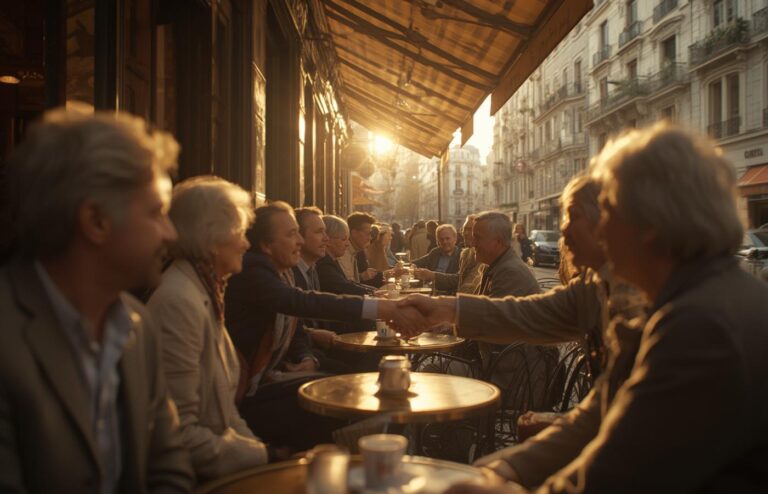
La bise, or cheek-kissing, is more complex than stereotypes suggest. While movies show French people air-kissing freely, in practice, most locals observe careful boundaries. The best approach is to follow the other person’s lead. In formal or business contexts, a handshake or polite nod is always appropriate. Among friends, younger generations, or close colleagues, you may be offered la bise.
- Women tend to initiate or signal la bise more often than men, but cues are highly variable.
- The number of kisses (two, three, or even four) can depend on region or family tradition.
- If unsure, extend your hand first and allow the other person to propose la bise.
Default to verbal greetings if you have doubts.
Dining etiquette made practical (ordering, paying, table manners)
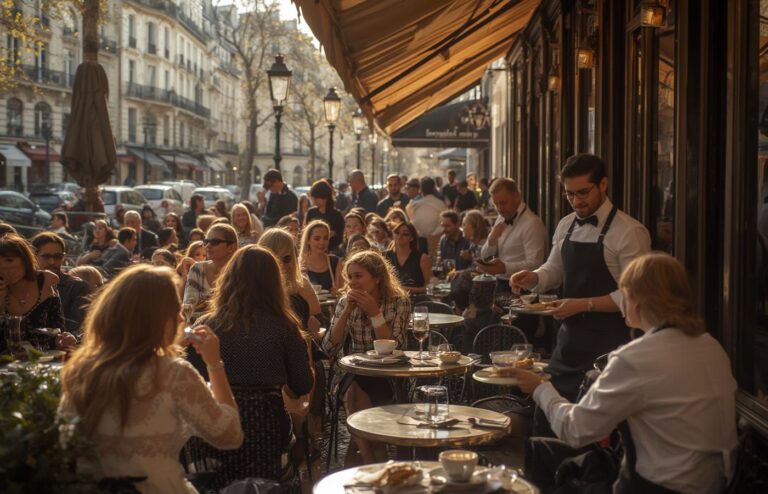
French dining etiquette revolves around respect for food, staff, and shared enjoyment:
- Always greet staff on entry and thank them on departure (“Bonjour, merci beaucoup, au revoir!”).
- Saying “Bon appétit” at the table is appreciated.
- Do not expect menu substitutions or customizations; French kitchens pride themselves on the chef’s vision.
- Doggy bags are rare, except in very touristy zones.
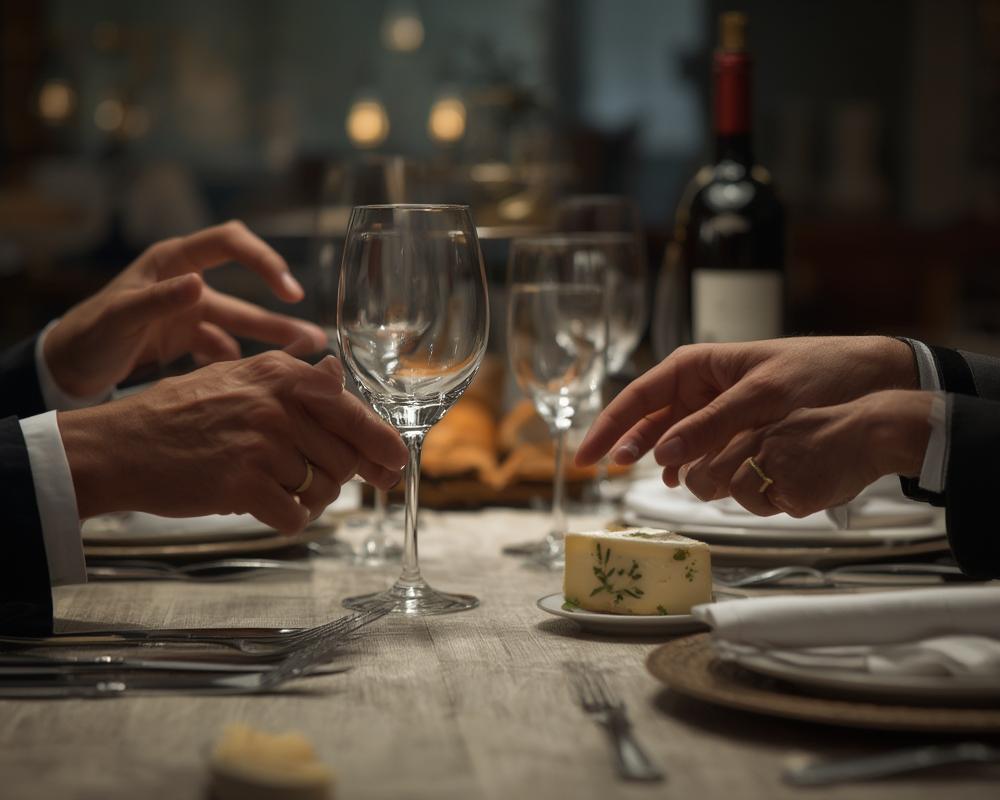
- Bread is placed directly on the tablecloth, not on a bread plate. Place bread right side up and tear pieces by hand.
- Cheese is cut respecting the shape of the original piece, usually from the center outward.
- Service charge is included. Small extra tips (“leave the coins”) are sufficient.
- Splitting the bill (faire moitié-moitié, “on partage ?”) is becoming more common among younger people and in casual dining, but not expected in formal restaurants.
💡 Pro Tip:
Always observe what locals do first—whether it’s greeting, how quietly they speak, or how they interact with staff. Mimicking these behaviors is the safest, most effective shortcut to blending in and avoiding social missteps.
🔥 Hacks & Tricks:
Memorize a handful of polite phrases (“Excusez-moi, pourriez-vous m’aider ?”, “Je vous en prie”) and lead with them in every transaction. When in doubt about “tu” vs “vous” or la bise, neutrally offer a handshake or wait for an explicit cue.
Greetings, goodbyes and small talk: exact phrases and timing
Exact language can make entering and leaving spaces much smoother:
- Upon entering shops or offices: “Bonjour, Madame/Monsieur” (morning to late afternoon), “Bonsoir” (from late afternoon/evening).
- Requesting help: “Excusez-moi, est-ce que je peux vous demander quelque chose ?”
- Asking if someone speaks English: “Excusez-moi, parlez-vous anglais ?”
- Leaving any shop or space: “Au revoir, bonne journée !” or “Merci, au revoir !”
- Small-talk safe zones: Weather, food, travel, sports (avoid politics, money, or overly personal questions unless invited).
Dress, volume and public behavior — what “looking French” often means
French people favor understated, coordinated outfits and avoid athletic attire in daily life unless exercising. Speaking softly, especially in public transport, is the norm. Behavior on the metro, in buses, and in waiting rooms skews quiet, with private conversations kept low and no loud phone calls. Contrasts with traveler norms are stark—loud groups and visible exercise wear tend to mark one out as an unfamiliar outsider.
Three advanced etiquette tips most competitor posts miss (deep dives)
- Tu/Vous shifting protocol: Only switch to “tu” when explicitly invited, or after mutually agreeing (“On se tutoie ?” is the script). Switching back is rare and can be interpreted as a snub. Professional contexts and adult strangers default to “vous.”
- “Fashionable lateness” by setting: For social invitations, arriving 10–15 minutes late is courteous. For business meetings, punctuality is non-negotiable.
- La bise cues and consent: Wait for an explicit gesture (lean in, raised cheek, open arms). If signaled, touch cheeks lightly without actual kissing. When unsure, extend a hand for a shake.
Referencing these little-seen nuances can sharply reduce awkwardness in more ambiguous or unfamiliar social situations.
What we don’t know (important data gaps readers should be aware of)
The available research leaves several important questions open:
- No reliable percentages or statistics on the frequency of etiquette-related traveler embarrassment, confusion, or misunderstanding.
- No published studies breaking down etiquette by region, city, rural/urban, or social class—even though observable differences likely exist.
- No aggregated analyses of traveler forums or community complaints about etiquette issues.
- No documented financial or legal penalties for etiquette violations (beyond general public disturbance laws).
Readers should be aware that much guidance is based on tradition and experience, not comprehensive or up-to-date measurements.
Regional, socio-economic and age variations — what to expect and how to adapt (practical guidance despite data gaps)
Despite the lack of formal studies, pragmatic observation reveals patterns. In Paris and other large cities, formality and efficiency prevail; greetings happen, but conversation may be brisk. In smaller towns or rural regions, social rituals may run longer, and locals appreciate more traditional engagement, such as addressing elders formally. Northern France may be slightly more reserved, while the south can be warmer and bolder with la bise and gestures. Younger French are increasingly open to casual address and international norms, whereas older generations expect classic formality.
The safest strategy: observe, ask when uncertain (“Comment préférez-vous qu’on se parle ?”), and follow local cues.
Traveler frustrations from forums & communities (synthesis + call for primary research)
Common traveler frustrations emerge in anecdotal reports: feeling judged for language mistakes, uncertainty about tipping, confusion around service and check requests, and surprise at the strictness or formality of certain settings. There is no aggregate forum data, but these themes repeat across advice columns and personal accounts. Future research should prioritize collecting structured feedback from traveler communities and conducting interviews or surveys to close these gaps.
Official/Expert guidance (2023–2024) and post-pandemic/digital changes — what exists and what’s new
No official or expert French government guides for etiquette, nor any studies on post-pandemic or digital communication etiquette changes, were found among the research for 2023–2024. Contactless payments, messaging etiquette, and norms around mask-wearing may differ locally, but these changes are largely undocumented in formal sources. This is an ongoing research opportunity.
Consequences of breaching key customs — social and (rare) legal outcomes
Violating key French culture and etiquette norms typically brings social, not legal, consequences. That may include cold or dismissive service, being subtly ignored, or simply provoking discomfort. Only in extreme disruptions (aggressive public behavior, drunken disturbances) would legal measures or fines apply, under general public order laws—not etiquette rules specifically. There is no quantifiable penalty data in any major source, but standing out negatively or being politely excluded is a real risk.
Practical pre-trip checklist and one-page quick phrases to memorize
Use this checklist and ready phrases to immediately avoid the most visible faux pas:
- Greet on entry: “Bonjour, Madame/Monsieur” / “Bonsoir”
- Enter softly, keep voice low in public
- Never assume English – try “Excusez-moi, parlez-vous anglais ?”
- Order as listed, avoid menu customizations
- Do not ask for doggy bags in typical restaurants
- Say “Bon appétit” before eating with others
- Place bread on tablecloth right side up, tear by hand
- Leave a small tip only if desired, service is included
- Dress smartly in public, avoid gym clothes unless exercising
- Always say “Au revoir, bonne journée !” when leaving shops
- Use “vous” unless explicitly invited to use “tu”
- Wait for other person to signal la bise—do not initiate
Quick phrases—with phonetic cheats:
- Bonjour, Madame/Monsieur (“bon-zhoor ma-dam/muh-syuhr”)
- Bonsoir (“bon-swahr”)
- Au revoir, bonne journée! (“oh ruh-vwar, bun zhor-nay”)
- Excusez-moi (“ex-kew-zay mwah”)
- Parlez-vous anglais? (“par-lay voo ong-lay”)
- Puis-je avoir… (“pwee-zhe ah-vwar…”)
- Je vous en prie (“zhuh voo zon pree” – you’re welcome/please)
- Merci, c’était délicieux (“mare-see, set-ay day-lee-syuh”)
- On fait moitié-moitié? (“on fay mwat-yay mwat-yay?” – Shall we split the bill?)
- Pardon/Excusez-moi (“par-don/ex-kew-zay mwah” – Sorry/Excuse me)
- Je ne comprends pas (“zhuh nuh kom-prahnd pah” – I don’t understand)
- Comment préférez-vous qu’on se parle? (“kom-mohn pray-fay-ray-voo kon suh parl” – How do you prefer we address each other?)
Sources, recommended next steps for deeper research, and editorial notes
- Main sources: synthesis of evidence from French etiquette research reports, social science literature, and local guidance, updated until 2024
- Key data gaps: Lack of systematic traveler surveys, no regional or demographic studies, no aggregated traveler or expat forum analysis, and no up-to-date official etiquette guides for 2023–2024
- Immediate tasks for editorial follow-up: Commission or source primary research/surveys, collect and analyze major forum feedback, check for new government or expert guidelines, gather real traveler stories, and update quantified risk/consequence data as available
For now, most advice in this pillar relies on traditional consensus and careful cross-checking of anecdotal and academic sources. Always review this content before referencing in formal or professional contexts, and revisit frequently for fresh updates as new data emerge.
FAQ
Is it rude to speak English in France if I try French first?
No, as long as you first say “Excusez-moi, parlez-vous anglais ?” Most French people appreciate the effort, and will switch to English if possible. How strict is the French about arriving late or early?
Arriving 10–15 minutes late for social visits is normal. Punctuality is essential for business meetings and appointments. Will I get in trouble if I forget to say “Bonjour” or “Au revoir”?
You won’t face legal trouble, but interactions will feel cool or abruptly ended. Not greeting is the #1 social faux pas. Can I tip extra in restaurants, or will it offend staff?
Extra tipping is not expected. Leaving coins is fine, but large tips may confuse staff since service is already included. How do I know if I should use “tu” or “vous” with someone?
Start with “vous” always. Wait for explicit invitations (“On peut se tutoyer ?”) to switch to the informal “tu.”