Paris City Guide: Complete Guide Visiting Paris for First-Timers & Photography Lovers
Picture this: It’s 6:47 AM on a Tuesday in October, and I’m standing on Pont Alexandre III watching the sunrise paint the Seine in shades of apricot and gold. There’s a street cleaner making his rounds, a jogger passing by, and exactly zero tourists blocking my shot. This is the Paris I fell in love with fifteen years ago – not the one you see on postcards, but the one that reveals itself when you stop rushing and start noticing.
After countless trips and three extended stays in different arrondissements, I’ve learned that a guide visiting Paris should do more than list monuments. It should help you understand the rhythm of this city, the way light moves across its buildings, and why sometimes the best moments happen when you’re completely, wonderfully lost. Whether this is your first visit or your fifth, I’m going to show you how to experience Paris the way I do – as a place that constantly surprises, even when you think you know it by heart.
Guide Visiting Paris: Understanding the City’s Beautiful Complexity
Let me share something I learned the hard way: Paris isn’t a city you can “do” in three days. It’s a place you experience in layers, each visit peeling back another level of understanding. The Paris you see in your twenties isn’t the same Paris you’ll discover in your forties, and that’s exactly what makes it magical.
The city is divided into 20 arrondissements that spiral outward like a snail shell from the center. Each has its own personality, its own secrets. I used to obsess over seeing everything, camera perpetually raised. Now I know better. The goal isn’t to photograph every landmark – it’s to find the moments between the landmarks that make your heart skip.
The Arrondissements That Captured My Heart
After years of exploring with my camera, certain neighborhoods have claimed pieces of my soul. The 1st arrondissement holds the Louvre and Tuileries, yes, but also those quiet arcades where Parisians duck in from the rain. The Marais (3rd and 4th) is where I go when I need to remember why I love cities – that perfect collision of medieval streets, contemporary art, and the world’s best falafel.
Montmartre (18th) might be touristy around Sacré-Cœur, but wander ten minutes uphill and you’ll find residential streets that look exactly as they did when Toulouse-Lautrec painted them. Saint-Germain-des-Prés (6th) is expensive and knows it, but golden hour in the Luxembourg Gardens makes you forget about your budget entirely.
The light catches the limestone buildings just so in the 7th arrondissement, especially around École Militaire. I stood there for a moment last spring, camera forgotten, just watching how the late afternoon sun turned everything buttery and soft. There’s something about Paris that photographs can’t quite capture – the smell of fresh bread mixing with metro air, the sound of fountain water in a hidden square, the feeling of belonging that hits you unexpectedly on a random Tuesday.
The Landmarks Worth Every Crowd (And When to Visit Them)
I’ll be honest with you – I resisted writing about the major attractions for years. They felt too obvious, too done. But then I realized: there’s a reason millions of people visit the Eiffel Tower and Notre-Dame. These monuments earned their fame, and dismissing them as tourist traps is doing yourself a disservice.
The Eiffel Tower: Timing Is Everything
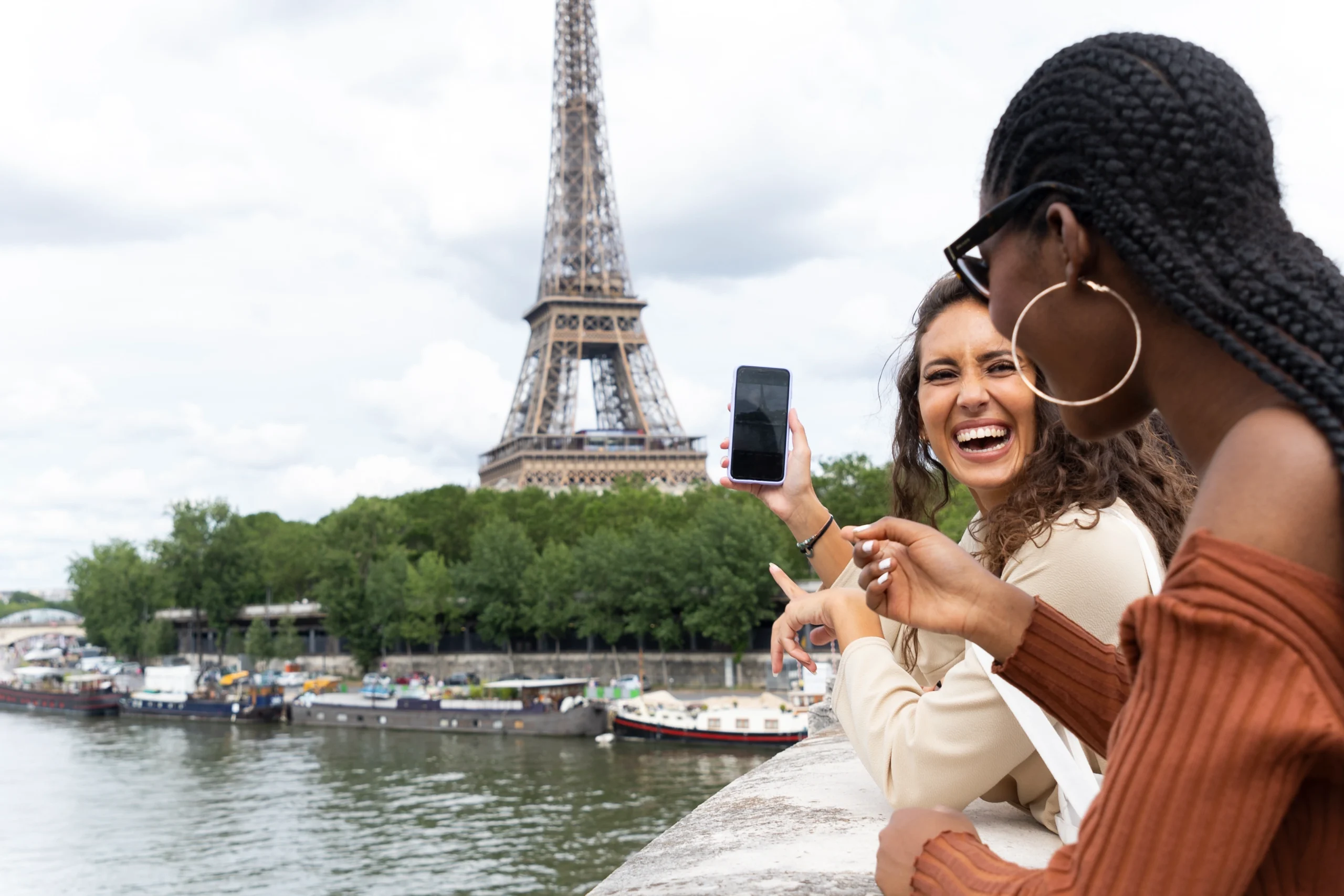
The Eiffel Tower deserves better than a rushed selfie. I’ve photographed it dozens of times, and the magic happens at specific moments. For the best experience, book your tickets at least two months ahead for sunset access to the second floor (the views are actually better than from the top). The golden hour in summer, around 8:30 PM, turns the entire city into a photographer’s dream.
But here’s what nobody tells you: the most stunning views of the Tower itself are from Trocadéro Gardens at sunrise. Yes, it means setting an alarm, but you’ll have the plaza almost to yourself, and the morning light is impossibly soft. I’ve seen grown adults literally gasp when the light hits just right.
Notre-Dame: A Different Kind of Beauty Now
Notre-Dame broke my heart when it burned in 2019. I’d photographed it hundreds of times, always meaning to go back, always assuming it would be there. Now, watching its restoration from the exterior is a different kind of powerful. You can’t go inside yet, but the island itself – Île de la Cité – remains one of Paris’s most atmospheric corners. The medieval streets behind the cathedral, the flower market, the way the Seine curves around it all… golden hour here is when the magic happens.
The Louvre: Strategy Required
The Louvre isn’t a museum you can see in one visit – it’s not even a museum you can see in ten visits. With 35,000 works of art spread across 72,735 square meters, you need a strategy. I learned this after spending my first visit in a glazed-eyed stupor, trying to see everything.
Now I pick two or three sections maximum per visit. The Islamic Art galleries are stunning and criminally under-visited. The Mona Lisa is… well, it’s smaller than you expect and surrounded by phone-cameras, but the Caravaggio paintings in the Italian section will stop you in your tracks. Wednesday and Friday evenings (when the museum stays open late) offer smaller crowds and dramatically different lighting.
Sacré-Cœur and Montmartre’s Many Faces
Yes, Montmartre is touristy. Yes, the area directly around Sacré-Cœur can feel like a gauntlet of bracelet-sellers and portrait artists. But climb the dome of the basilica itself (300 steps, no elevator) and you’ll understand why I keep coming back. The 360-degree views of Paris from the top are worth every breathless step.
The real Montmartre reveals itself in the early morning or late evening. Rue Lepic, where Amélie was filmed, still has that village-within-a-city feel. Place du Tertre is unbearable at midday but lovely at 8 AM when artists are just setting up. I wandered into a tiny cemetery on Rue Caulaincourt once, purely by accident, and found myself completely alone among tombs dating back to 1831.
Hidden Corners That Still Surprise Me
After all these years, Paris keeps revealing secrets. These are the places that don’t make most guides but probably should.
Passages and Arcades: Paris’s Covered Treasures
The covered passages of Paris – those glass-roofed shopping arcades from the 1800s – are like stepping into another era. Galerie Vivienne near the Palais Royal is the most beautiful, with its mosaic floor and Art Nouveau details. I’ve spent entire afternoons here when the rain turns the glass ceiling into a drumming symphony.
Passage des Panoramas is grungier but more authentic, filled with stamp collectors and old print shops. The light filtering through the old glass creates these incredible patterns that change throughout the day. Photographers: bring your camera, shoot in the early afternoon when the sun is high enough to really illuminate the interiors.
Canal Saint-Martin: Where Parisians Actually Hang Out
This is where I come when I need to remember that Paris is a living city, not a museum. The tree-lined canal in the 10th arrondissement is where young Parisians picnic on summer evenings, bottles of wine balanced on the cobblestones, feet dangling over the water.
The iron footbridges crossing the canal are perfect spots to watch the locks operate – yes, it’s mesmerizing. Sunday afternoons here feel like a Renoir painting came to life, all dappled sunlight and casual joy. There’s a certain je ne sais quoi about this neighborhood that the more polished areas lack.
Promenade Plantée: The Original High Line
Before New York’s High Line, there was Paris’s Promenade Plantée – a 4.7-kilometer elevated park built on an old railway viaduct. It runs from Bastille to the edge of the 12th arrondissement, and walking it feels like discovering a secret Paris hovering above street level.
The sections through residential areas are my favorite – you’re literally walking through people’s lives, past their balconies and through tree canopies. It’s especially magical in early autumn when the leaves are turning and the light slants low through the branches.
Where to Stay: Matching Neighborhoods to Your Paris Dreams
I’ve stayed in seven different arrondissements over the years, and each shaped my experience entirely. Your choice of neighborhood matters more than your choice of hotel.
Le Marais (3rd & 4th): My Personal Favorite
If I could only stay in one neighborhood forever, it would be the Marais. You’re walkable to everything, surrounded by incredible food, and the architecture is gorgeous without being museum-perfect. The Jewish quarter around Rue des Rosiers has the best falafel outside of Tel Aviv. The gay-friendly southern Marais pulses with energy every evening.
Boutique hotels here tend to occupy converted 17th-century hôtels particuliers (private mansions). Expect to pay €150-300 per night for something with character. Budget travelers should look at the numerous Airbnbs in converted chambres de bonne (former servants’ quarters) – tiny but atmospheric.
Saint-Germain-des-Prés (6th): Literary Luxury
This Left Bank neighborhood screams old-world Paris. Hemingway and Sartre haunted these cafés, and somehow you can still feel their ghosts. It’s pricier – expect €200-500 per night for hotels – but waking up to croissants from Pierre Hermé and coffee at Les Deux Magots might be worth blowing your budget.
The streets are wider here, the buildings more elegant. It’s quieter than the Marais but equally central. I love this area for longer stays when I want to pretend I’m a Parisian intellectual from the 1920s.
Montmartre (18th): Village Vibes with a View
Staying on the hill means climbing stairs (so many stairs), but you get that village atmosphere and spectacular views. Hotels are generally more affordable here – €80-150 per night – though quality varies wildly. The higher up the hill you stay, the more residential and quiet it becomes.
Just be prepared: getting home late at night means either a steep walk or a taxi, as the metro stations are all at the bottom of the hill. But there’s something romantic about stumbling home uphill through gas-lit streets.
Budget Options That Don’t Sacrifice Location
The Latin Quarter (5th) offers hostels and budget hotels (€40-100) within walking distance of Notre-Dame and the Panthéon. It’s student-heavy, which means cheap food and late-night energy. The area around République (10th/11th) is increasingly hip, with excellent value hotels (€70-130) and authentic neighborhood life.
I’ve learned that in Paris, location trumps amenities. A simple, clean room in the 4th arrondissement beats a fancy hotel in the 16th every time.
Getting Around: Mastering Paris’s Transportation Web
The Paris metro intimidates first-timers, but it’s actually one of the world’s most intuitive systems once you understand the logic. I’ve navigated it in everything from midnight ball gowns to photography equipment-laden backpacks.
The Metro: Your Underground Network
With 16 lines connecting 308 stations, you’re never more than a five-minute walk from a metro entrance in central Paris. A book of ten tickets (carnet) costs €17.35 versus €2.10 for a single ticket – always buy the carnet. Or better yet, get a Navigo Easy card (€2) and load it with tickets. You can use the same ticket for metro, bus, and tram within 90 minutes.
Here’s what took me years to figure out: exits are marked by street names, not compass directions. Know which street you’re heading toward before you descend. Some stations have a dozen different exits, and choosing the wrong one can add ten minutes of surface navigation.
Line 1 is automated and runs the major tourist corridor (Louvre to Arc de Triomphe). Line 6 crosses the Seine on an elevated track between Passy and Bir-Hakeim – sit on the left side heading south for incredible Eiffel Tower views. The light catches the tower just so as you cross the bridge, and even after dozens of rides, I still pull out my camera.
Buses: The Scenic Route
I resisted buses for years, assuming they were slower than the metro. What a mistake. Bus 69 runs from the Eiffel Tower through Saint-Germain and the Marais to Père Lachaise – basically a free tour of the best of Paris. Bus 96 follows the Seine on the Left Bank, offering endless photo opportunities.
Buses use the same tickets as the metro, but you must board through the front door and validate. They stop running around 12:30 AM (except for night buses), but during the day they’re perfect for understanding the city’s geography in a way the underground metro never can.
Walking: The Best Way to Understand Paris
Between 75% of my Paris exploring happens on foot. The city reveals itself at walking speed – that hidden courtyard, that unexpected fountain, that café where the waiter remembers how you take your coffee. Paris is remarkably compact; you can walk from the Louvre to the Eiffel Tower in 40 minutes.
My favorite walks: the Seine’s right bank from Pont Neuf to Pont de l’Alma at sunset. The back streets of the Marais on Sunday mornings. Anywhere in the rain, when the wet cobblestones turn into mirrors reflecting café lights.
When to Splurge on Taxis
Parisian taxis aren’t cheap (€10-20 for most central trips), but sometimes they’re worth it. Late nights in heels after a fancy dinner. When you’re carrying camera equipment between shoots. During August heat waves when the metro becomes a subway sauna.
Uber and G7 (the main taxi app) work reliably. Just know that traffic during rush hours (8-10 AM, 5-8 PM) can turn a 15-minute ride into 45 minutes of expensive frustration.
Eating Your Way Through Paris: A Photographer’s Food Diary
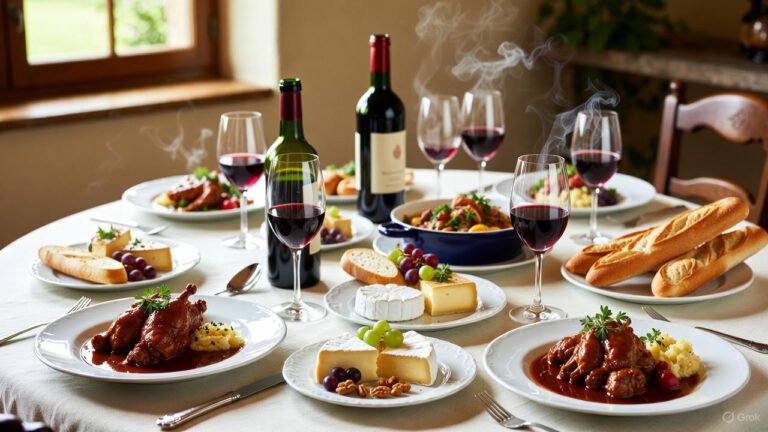
I’ve never been a food writer, but living in Paris taught me that meals here aren’t fuel – they’re art, ritual, and social glue all at once. My approach to Parisian food is the same as my approach to photography: seek authenticity over Instagram-worthiness.
The Bakery Pilgrimage (Non-Negotiable)
Every morning in Paris should start with bread. Not just any bread – bread from a proper boulangerie where flour dust coats everything and the baguette crackles when you press it. Du Pain et Des Idées near Canal Saint-Martin makes these escargot pastries with pistachio and chocolate that I dream about in London.
Look for the “Artisan Boulanger” sign, which means they make bread on-site. The difference between factory bread and artisan bread in Paris is the difference between seeing and truly observing. One is functional; the other is transformative.
The Market Experience
Paris’s markets are where the photography and the food converge perfectly. Marché d’Aligre (12th) operates Tuesday through Sunday and feels authentically Parisian – locals arguing over fish prices, mountains of just-picked vegetables, North African spice vendors creating compositions of color.
Marché des Enfants Rouges in the Marais (oldest covered market in Paris, dating to 1615) has phenomenal cooked food – the Moroccan stall, the Japanese bento counter, the organic vegetable stands. I’ve shot hundreds of photos here, but I always end up putting the camera down to eat.
Bistros vs. Brasseries vs. Restaurants
Here’s the breakdown I wish someone had given me years ago: Bistros are small, casual, often family-run. Think blackboard menus, paper tablecloths, plat du jour. Brasseries are larger, open longer hours, serve Alsatian-influenced food and lots of shellfish. Restaurants range from neighborhood spots to Michelin-starred temples.
For authentic bistro experiences: Le Petit Pontoise (5th) for traditional French classics, Chez Janou (3rd) for Provençal specialties, Bistrot Paul Bert (11th) for perfect steak-frites. Budget €20-35 per person for bistros, €30-50 for brasseries.
Café Culture: Where Photography Meets Philosophy
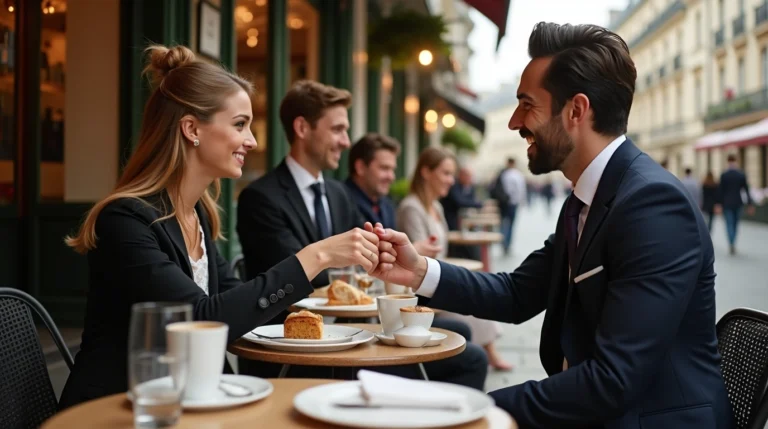
Parisian cafés aren’t about the coffee (which is fine but rarely spectacular) – they’re about claiming your small piece of sidewalk, watching the world, existing without rushing. Café de Flore and Les Deux Magots are famous for good reason, but at €9 for an espresso, they’re overpriced nostalgia.
I prefer Café Charlot in the Marais (excellent people-watching), the tiny perfect cafés around Place des Vosges, or any neighborhood spot where workers grab their morning café crème at the bar. The light streaming through café windows in late afternoon creates these pools of gold that make everything cinematic.
Practical Essentials: The Details That Matter
Let me share the practical wisdom I’ve accumulated through mistakes, missed trains, and moments of pure confusion.
When to Visit (From a Light-Chaser’s Perspective)
April-May and September-October offer the best light for photography and the most comfortable weather. Spring brings longer days and blooming chestnuts; autumn delivers that golden light photographers obsess over. Crowds are manageable, prices reasonable.
June-August means tourist masses and heat (yes, it gets hot, and no, most buildings don’t have air conditioning). But the extended daylight is glorious – sunset around 10 PM in June – and Parisians vacate in August, leaving the city to visitors. It’s weird but kind of wonderful.
November-March is when I come for my deepest work. The light is low and dramatic, perfect for moody photography. Christmas markets and decorations transform the city. Yes, it’s cold and sometimes rainy, but hotel prices drop significantly, museums are emptier, and you’ll see the Paris that Parisians inhabit.
Money Matters
Paris isn’t cheap, but it’s not as expensive as London or Zurich. Daily budget ranges: €50-80 (hostel, street food, walking everywhere), €100-150 (mid-range hotel, bistro meals, some taxis), €200+ (boutique hotels, nice restaurants, shopping).
Credit cards work everywhere, but bring a chip-and-PIN card if possible. Some smaller establishments still prefer cash. ATMs are everywhere; avoid the currency exchange booths that charge criminal rates.
Museum passes: The Paris Museum Pass (€62 for 2 days, €77 for 4 days, €92 for 6 days) saves money if you’re hitting multiple museums, but more importantly, it saves time with skip-the-line access. I buy it every time.
Language and Etiquette
Here’s the truth: Parisians aren’t rude, but they do expect basic politeness. Always start with “Bonjour” (before noon) or “Bonsoir” (after 6 PM). Always say “s’il vous plaît” and “merci.” This transforms interactions completely.
Most Parisians under 40 speak some English, but attempt French first. Even butchered French shows respect. I’ve found that my terrible accent and worse grammar endear me to shopkeepers and café servers who appreciate the effort.
Safety and Common Sense
Paris is generally safe, but pickpockets target tourist areas and crowded metros relentlessly. Keep valuables in front pockets or cross-body bags. The Eiffel Tower, Sacré-Cœur approaches, and metro lines 1 and 4 are prime pickpocket territory.
Scams to avoid: the “gold ring” scam (someone “finds” a ring, asks if it’s yours, then demands money). The friendship bracelet scam (someone ties a bracelet on your wrist, then demands payment). The petition scam (clipboard-wielding groups asking for signatures and donations). Just say “non merci” firmly and keep walking.
Trust your instincts. If something feels off, it probably is.
Beyond Central Paris: Day Trips Worth the Journey
Some of my favorite Paris memories happened outside Paris proper. These excursions offered different light, different architecture, different ways of seeing French culture.
Versailles: Arrive Early or Suffer
The Palace of Versailles is magnificent and absolutely worth visiting, but go first thing when it opens (9 AM) or you’ll spend hours in lines. The gardens – 800 hectares of formal landscaping – are where I spend most of my time. Rent a bike, pack a picnic, find a hidden grove.
The light in the Hall of Mirrors is best mid-morning when sun streams through the western windows. Marie Antoinette’s estate (Petit Trianon and Hameau de la Reine) is quieter and more intimate than the main palace. The musical fountain shows on weekend afternoons are touristy but genuinely enchanting.
Giverny: Monet’s Gardens Come to Life
An hour from Paris, Claude Monet’s gardens in Giverny are every bit as beautiful as his paintings suggest. The water lily pond, the Japanese bridge, the explosion of flowers – it’s living Impressionism. Visit between late April and early October (peak bloom: May-June).
I stood there for a moment, camera forgotten, watching how light played on the water exactly as Monet painted it 130 years ago. The gardens close at 6 PM, but the last hour is magical – fewer visitors, softer light, a sense of communion with the place.
Château de Fontainebleau: Versailles Without the Crowds
This massive royal château 55 kilometers southeast of Paris gets a fraction of Versailles’s visitors but offers equal grandeur. It’s where Napoleon said farewell to his Old Guard, where French kings lived for 800 years. The Renaissance frescoes, the formal gardens, the forest surrounding it – it all feels more accessible and less overwhelming than Versailles.
The forest itself (25,000 hectares) is crisscrossed with hiking and rock-climbing routes. I’ve spent entire afternoons here with my camera, chasing light through ancient oaks.
Making Your Paris Story Unique
After all these visits, I’ve realized that the best guide visiting Paris isn’t about checking boxes – it’s about finding your own relationship with the city. Maybe yours will be through food, or history, or late-night jazz clubs, or simply the way light falls on limestone at 7 AM.
Give yourself permission to ignore the “must-see” lists sometimes. Get lost on purpose. Sit in a park for two hours with a book. Return to the same café three days running until the waiter knows your order. These repetitions and pauses are where Paris stops being a destination and starts being a place you know.
I still get butterflies every time the train pulls into Gare du Nord. After fifteen years, dozens of visits, thousands of photographs, Paris still surprises me. There’s always another courtyard to discover, another angle on a familiar monument, another moment when the light catches something just so and time seems to pause.
That’s the real magic of Paris – it’s not a city you can ever fully capture, whether with a camera or words. It’s a city that captures you instead, piece by piece, visit by visit, until you realize you’ve left small parts of yourself in hidden corners all across the arrondissements.
Start planning your trip, but don’t over-plan. Leave room for serendipity. Paris rewards the wanderers, the observers, the people who put their phones down and simply look. Golden hour in Paris is when the magic happens – whether that’s sunset over the Seine or that first morning coffee when jet lag has you up before dawn and you have the entire city to yourself.
Bon voyage, and may your Paris be everything you hope for and nothing like you expected.
Sources and Additional Resources
1 – Paris Convention and Visitors Bureau (parisinfo.com) – Official tourism website with current events and practical information
2 – RATP Official Site (ratp.fr) – Paris public transportation maps, schedules, and trip planning
3 – Musée du Louvre (louvre.fr) – Official museum website for tickets and collection information