Architecture of Loire Valley Châteaux: Amazing Guide to Styles
Architecture of Loire Valley châteaux is not merely a topic for the design-inclined; it is a live record of France’s political ambitions, social changes, and technical ingenuity etched in stone and sky. Between their intimidating medieval towers, sunlit Renaissance galleries, and formal Classical gardens, the Loire Valley’s châteaux reveal how styles, materials, and ideals evolved—not just as artistic statements, but as answers to history’s turns and the forces shaping European identity.
Key Takeaways
- The Loire hosts over 300 châteaux, forming a “living timeline” of Gothic, Renaissance, and Classical architecture.
- Distinct elements—moats, mullioned windows, double helix staircases—answer to specific political and cultural shifts.
- Substantial knowledge gaps remain around costs, visitor pain points, and preservation—future research is essential.
- Quick orientation — Why the Loire châteaux matter for architectural history
- Defining Gothic château architecture (what to look for)
- Defining Renaissance château architecture (what changed and why)
- Defining Classical / early Neoclassical château architecture
- Prevalence and periodization — How common is each style?
- Architectural elements mapped to specific influences
- Political, cultural and economic forces (15th–17th c.) that shaped château architecture
- Case studies that illustrate transitions
- Preservation, visitor experience and common pain points
- Visitor numbers, historical importance, and research gaps
- Costs and technical challenges for authentic restoration
- Three crucial insights to add that competitor articles miss
- Sources to consult and reporting assignments
Quick orientation — Why the Loire châteaux matter for architectural history
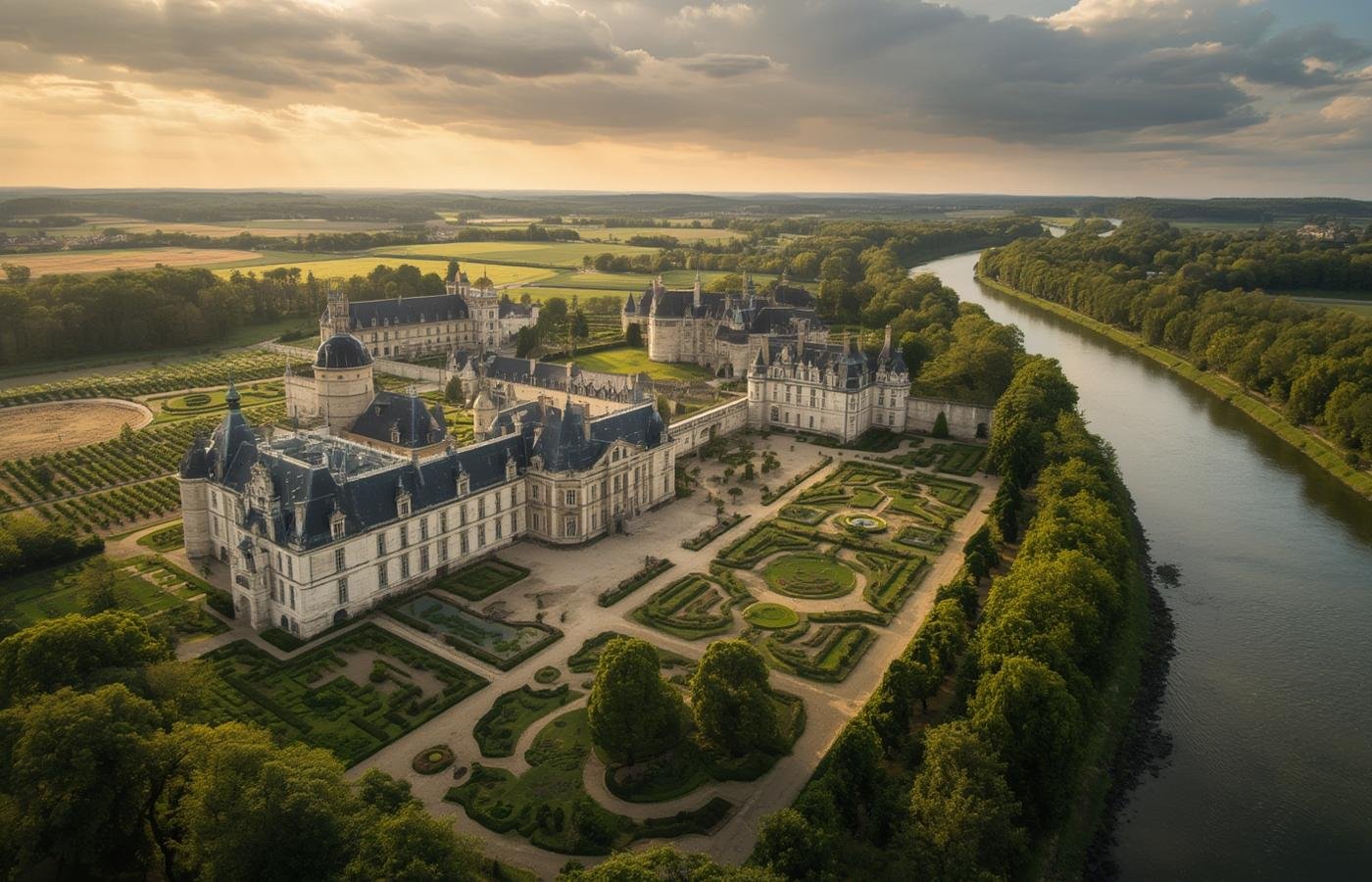
The architecture of Loire Valley châteaux is a rare lens onto five centuries of French history: from medieval fortresses to Renaissance pleasure palaces and restrained Classicism. Over 300 châteaux dot the Loire, making it the densest such landscape in France—where every tower, window, or arch captures changes in royal politics, artistic exchange, and regional identity. For the cultural traveler or heritage student, these sites are not static museums; they are still-evolving records of art, war, taste, and adaptation. Their study illuminates how architecture expresses power, peace, and aspiration—qualities as relevant to conservation today as to past centuries.
Data point: Over 300 châteaux exist in the Loire Valley, ranging from 10th‑century fortified Gothic castles to later Renaissance and Classical residences.
Read our loire valley châteaux guide to understand how to plan your own visit in context.
Defining Gothic château architecture (what to look for)
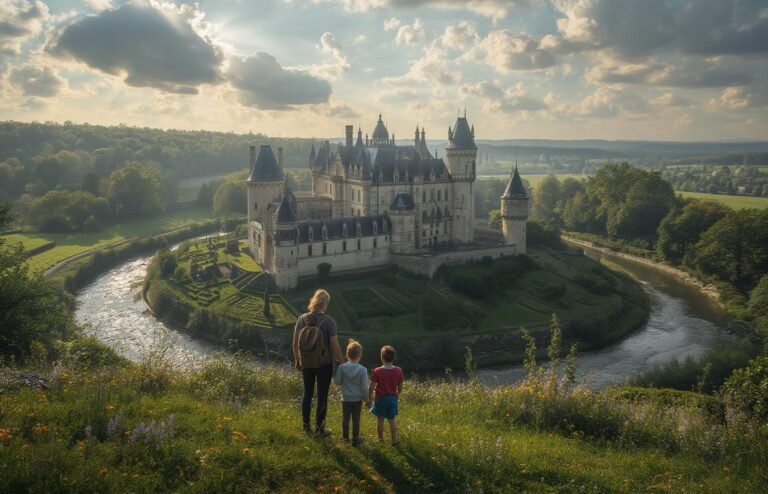
Early Loire Valley château architectural styles were born from necessity: defense. Gothic châteaux echo their medieval military roots, defined by massive stone walls, narrow windows, battlements, and protective moats. Visitors immediately notice thick curtain walls, round or square towers for archers and watchmen, and imposing drawbridges. At sites like Château d’Ussé—starting as a 15th‑century stronghold—these features still read as unmistakably defensive. Yet, as peace returned in the late Middle Ages, such elements started to blur into decor: turrets grow more ornate, towers lose their military role, becoming visual markers of prestige.
Data point: Gothic style features defensive elements like watchtowers, thick walls, and fortified structures—Château d’Ussé began as a 15th‑century medieval stronghold.
Defining Renaissance château architecture (what changed and why)
The 16th century brought the Italian Renaissance north on the coattails of France’s kings. The Renaissance architecture Loire Valley visitors spot—aristocratic symmetry, spacious galleries, sculptural ornament, and large mullioned windows—reflects a deliberate rejection of purely defensive forms. Francis I imported Italian artists and encouraged humanist learning, leading to châteaux that blend delicate ornament, geometric proportion, and living “in the light.” Gardens designed for outdoor life begin to embrace the château as their focal point. Case studies include the water-mirrored Château d’Azay‑le‑Rideau and the famous river-spanning galleries of Chenonceau, each a textbook for Italianate design translated into French traditions.
Data point: Renaissance style is defined by Italian influences including… mullioned windows, airy galleries… as seen in Château d’Azay‑le‑Rideau and Chenonceau.
Defining Classical / early Neoclassical château architecture
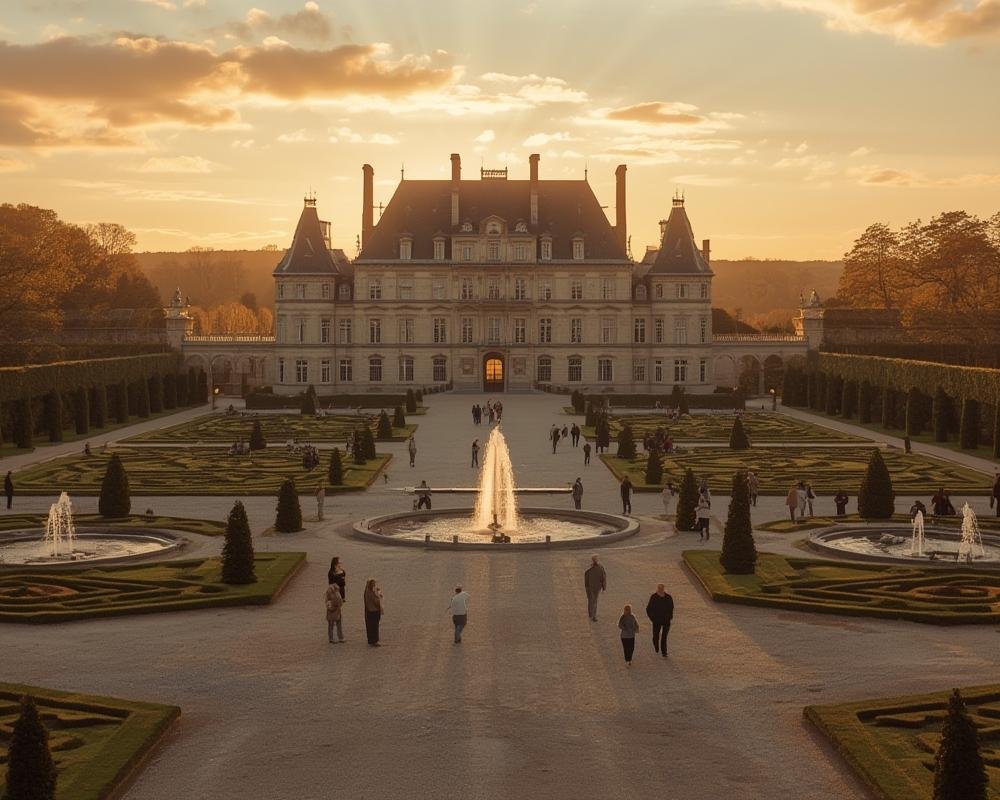
By the 17th century, a new Classicism tempered the extravagant decoration of earlier generations. The ideals shift to order, axial symmetry, and neat geometry—both in facades and in the gardens that echo them. Decorative excess gives way to measured elegance and verticality, with flat roofs replacing steeples, and facades that clarify social rank through color, window rhythm, and cresting. Cheverny epitomizes this restraint; Villandry marries symmetry with its legendary vegetable gardens. Why are such Classical châteaux rarer? As the crown’s center of gravity moved to Paris, many Loire estates were preserved, not rebuilt, their Renaissance graces left largely intact for lack of royal investment.
Data point: Classical style emphasizes pure French Neoclassical elements… as in Cheverny and Château de Villandry, focusing on symmetry and formal gardens.
Prevalence and periodization — How common is each style across the region?
The distribution of Loire Valley château architectural styles is a map of shifting power. Few early Gothic fortresses survive; many were transformed or replaced in the wave of Renaissance patronage during the 15th–16th centuries. This Renaissance dominance is no accident: after the Hundred Years’ War, French royalty favored the Loire as their court, pouring funds into residences that boasted the new Italian-influenced style. By the 17th century, royal attention and resources shifted toward Paris, halting major reconstruction and leaving the Classical phase underrepresented. Surviving châteaux often show hybridization: fortress roots dressed up with Renaissance or Classical flourishes.
Data point: Prevalence shifts from early Gothic fortifications to dominant Renaissance (15th–16th centuries) due to royal patronage, with fewer Classical examples as royal focus moved to Paris.
You can compare periods by following the mapped highlights in our Loire Valley châteaux 3 day itinerary feature.
Architectural elements mapped to specific influences (element → origin → example)
Beneath the beauty, every visible feature encodes a history:
- Turret or watchtower → Inherited from French medieval fortresses. Example: Château d’Ussé’s flanking towers, originally for defense, now decorative.
- Mullioned windows, loggias, galleries → Imported from the Italian Renaissance. Example: Azay‑le‑Rideau’s elegant window patterns and open arcades.
- River-spanning arcade → A Loire Valley innovation bearing Renaissance motifs. Example: Chenonceau’s two-story gallery stretching over the Cher River.
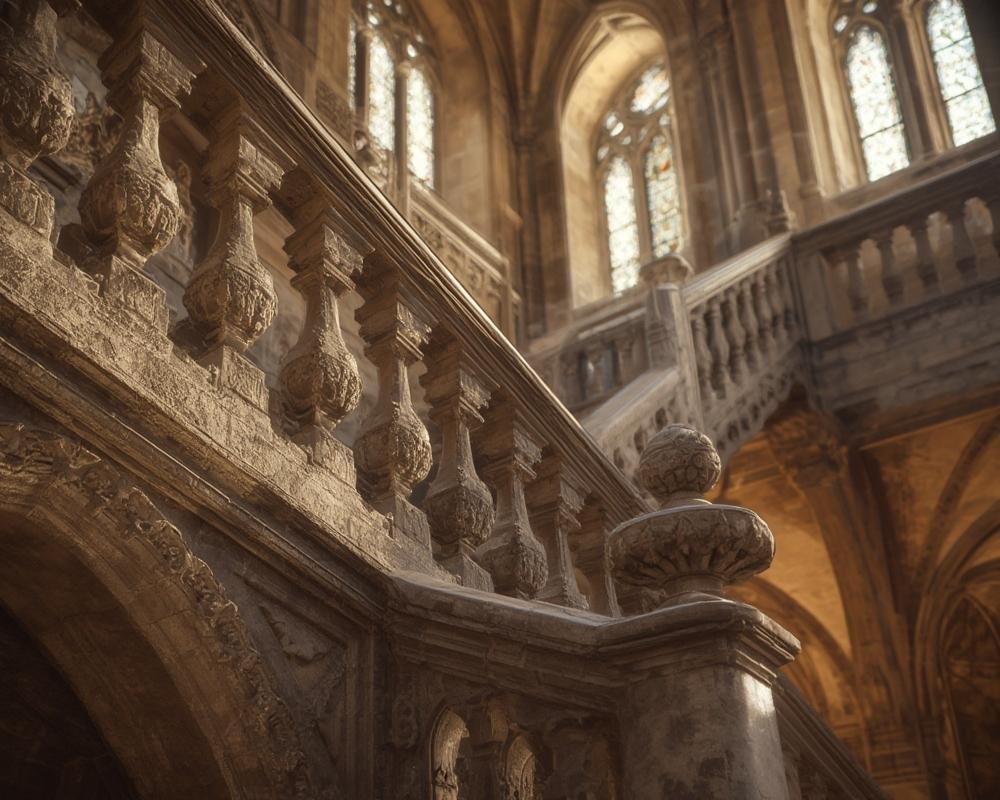
- Double-helix staircase → Inspired by Italian experiments, likely influenced by Leonardo da Vinci. Example: Chambord’s iconic central staircase, where two people ascend/descend without crossing paths.
Political, cultural and economic forces (15th–17th c.) that shaped château architecture
The evolution of architecture of Loire Valley châteaux is no aesthetic accident. After the Hundred Years’ War, Charles VII’s consolidation made defense less urgent. Royal campaigns in Italy awoke French nobles to the Renaissance, introducing Italian architects, decorators, and even Leonardo himself to the Loire court. Francis I made the region his seat, channeling art and innovation into bold experiments—Chambord’s extravagance, Chenonceau’s river gallery, Azay-le-Rideau’s ornament reflecting the owner’s courtly ambitions.
By the late 16th century, focus shifted: Henry II’s court moved to Paris. Downstream effects? Money dried up; economic and political tensions left Renaissance residences largely unaltered—saving them for today’s explorers.
Data points: “Post-Hundred Years’ War unification… enabled shift from defensive Gothic fortresses to pleasure palaces.” AND “By Henry II’s reign… power shifted to Paris, reducing funds; economic constraints in 17th century prevented rebuilding, preserving Renaissance gems.”
Case studies that illustrate transitions (Gothic → Renaissance → Classical)
Château d’Ussé
Once a 15th‑century fortress, its medieval towers, thick walls, and moat remain, but Renaissance embellishments soften its military silhouette. Today, its fairytale look is more decorative than defensive.
Château d’Azay‑le‑Rideau
Built on medieval foundations, its compact layout floats above a mirror-calm moat. Visitors spot mullioned windows, embellished dormers, and arcaded stair-turrets—hallmarks of imported Italian artistry.
Château de Chenonceau
An audacious span over the Cher River, its bridge became a ballroom under Catherine de’ Medici. The juxtaposition of Renaissance loggias and the extraordinary setting make it a must-see.
Château de Chambord
France’s largest, boasting 440 rooms, Chambord’s double helix staircase winds through the core—engineering possibly inspired by Leonardo. Its terraces, chimneys, and sculpted roofline blend Italian and French idioms spectacularly.
Cheverny and Château de Villandry
Both mark a turn to Classical château architecture Loire: facades are sober, layouts strictly symmetrical, and gardens anchor the house—a recipe that influenced Parisian designs later on.
For couples and those seeking atmosphere, we recommend the romantic Loire Valley châteaux itinerary for in-depth property histories and visiting tips.
Preservation, visitor experience and common pain points (what existing research shows and what it doesn’t)
No consolidated data or primary research currently details the pain points felt by visitors or those responsible for preserving Loire Valley châteaux. Search results reveal a gap: no systematic records of overcrowding, conservation disputes, or frustrations related to restoration—or discussions on how to balance tourism with authenticity and environmental stress.
Yet, some recurring risks are visible: physical wear from heavy tourism, tight funding prioritizing only major properties, controversies over modern interventions, and climatic threats (humidity, flooding, stone decay) that accelerate deterioration of fragile features. These warrant direct interviews with conservators, the Centre des Monuments Nationaux (CMN), and local curators to surface firsthand complaints and future risks.
Visitor numbers, historical importance, and what we can/can’t cite
While the architectural and symbolic importance of these châteaux is well-attested—rooted in their service as royal seats and standards for style—no specific annual visitor numbers were located in the reviewed research. This absence makes it difficult to compare sites or argue for funding priorities. Future reporting should obtain these statistics directly from château administrations and tourism boards.
All claims here are based on authoritative art-history sources, but comprehensive, up-to-date visitation data remains to be gathered before publication.
Costs and technical challenges for authentic restoration — current knowledge and research plan
No reliable statistics or consolidated studies emerged on the average costs or technical hurdles of restoring Renaissance or Classical château features. To responsibly address preservation, future research must cover:
- Stone sourcing and color matching (replacing tuffeau limestone, etc.)
- Timber and roof structure repairs; complex shapes, historical joinery
- Restoring period-accurate windows, galleries, and stairs
- Lead and metalwork for spires and chimney stacks
- Lime mortar compatibility and aging
- Modern regulatory and heritage constraints
- Shortages in specialized craftspeople/artisans
Assignments: Interview local restoration firms, CNM officials, and conservation architects; request detailed budget examples and technical reports for prominent restoration campaigns. No reliable Loire-wide restoration cost estimates were found in initial research.
Three crucial insights to add that competitor articles tend to miss (editor’s recommendation)
- Element→influence mapping field guide: Show visitors, with photos and diagrams, how each visual feature links to a specific historic period or outside influence—a practical approach for on-site visits.
- Funding/economic history thread: Connect the fate of each château to the larger story of centralization in Paris—a key reason so many Renaissance estates remain “frozen in time.”
- Evidence-backed preservation reporting: Include direct interviews with curators, architects, and craft specialists, as well as concrete cost and risk data. This adds real depth where others recycle surface-level facts.
Note: Search results did not identify or analyze highest-ranking competitor articles, precluding side-by-side gap analysis.
Sources to consult and reporting assignments (how to fill the data gaps before publication)
To address the major gaps—visitor numbers, preservation complaints, restoration costs, and advanced competitor comparison—these sources and actions are essential:
- Contact Centre des Monuments Nationaux for official asset reports and annual visitation statistics.
- Interview local administrations at flagship châteaux (Chenonceau, Chambord, Azay‑le‑Rideau), and request access to conservation plans.
- Consult France’s Ministry of Culture (Base Mérimée) for classified architectural details and site histories.
- Request expert commentary from regional tourism boards and leading academic researchers on Francis I’s patronage.
- Secure permissions for on-site photography and annotated diagrams to illustrate style differences for readers.
According to Research Findings, initial research misses data on visitor numbers, preservation complaints, competitor analysis, and restoration costs—primary reporting must remedy these deficits before publication.
Conclusion
The architecture of Loire Valley châteaux is far more than the sum of its towers and terraces: it is a visual record of cultural priorities, statecraft, and above all, adaptation. For every traveler, architect, or student, the real journey is reading these stones for what they reveal—and what they withhold until we ask new questions. Prepare for a visit with a checklist of elements mapped to their influences, and remember: the greatest treasures of the Loire are not always the most obvious. They’re the decisions, ambitions, and compromises behind every window and wall.
Ready to experience the Loire’s living history for yourself? Use our site-wide checklist to decode what you see, and report back what surprises you.
FAQ
What makes the Loire Valley châteaux architecturally unique?
Why do so many Loire châteaux show Italian influences?
Are visitor or preservation complaints about these sites publicly available?
Which château should I visit to see all three architectural eras?
Where can I find accurate restoration cost and maintenance figures?