Driving French Riviera: The Best Practical Guide For 2024
Driving French Riviera is the best way to experience the Côte d’Azur on your own terms—if you know the insider routes, costs, and road realities. This hands-on guide lays out exact scenic drives, realistic drive times, daily budgets, and solutions to every major road trip challenge. With honest advice and practical details, you’ll navigate the French Riviera from Monaco to Cannes (and winding inland) without nasty surprises.
Key Takeaways
- The sweet spot for a French Riviera road trip is 5 to 14 days—more time lets you drive less per day and dig deeper.
- Coastal drives between Nice, Villefranche-sur-Mer, Èze, Monaco, Antibes, and Cannes deliver the Riviera’s most stunning views, but parking is limited and paid almost everywhere near beaches and landmarks.
- Budget realistically: daily costs (car, fuel, tolls, paid parking, attractions) quickly add up—there’s no such thing as a free view here.
- Quick summary — trip at a glance
- Best months and optimal itinerary length
- Three sample itineraries with day-by-day legs
- Precise scenic route segments (coastal drives to actually use)
- Top 3 often-overlooked scenic drives & viewpoints
- Distances & realistic drive times between key stops
- Common driving challenges and exact avoidance tactics
- Costs — daily and total budget template
- 2024 road rules, speed limits, local regs
- Car rental and insurance — recommended companies, cover levels, and pitfall
- Parking — where to park, prices, and tricks to avoid high fees
- Must-see attractions with practical visiting notes
- Sample day plans for high-photo, low-stress days
- Practical packing, apps, and language snippets
- Data gaps & fact-check checklist
Quick summary — trip at a glance
Your driving French Riviera experience hinges on planning and timing. The classic self-drive corridor runs Nice ⇄ Villefranche-sur-Mer ⇄ Èze ⇄ Monaco ⇄ Menton eastward, and Nice ⇄ Cap-Ferrat ⇄ Beaulieu ⇄ Antibes ⇄ Cannes westward. Itineraries range from focused 5-day loops to in-depth 14-day explorations (Rick Steves, Lonely Planet, and real traveler samples). Peak travel is June–August—busiest but best for lavender (late June–late July). Compact town layouts and paid parking mean each day should balance driving with walking and train/ferry shortcuts.
Best months and optimal itinerary length (when to go and how long)
Choosing your French Riviera road trip itinerary window is crucial.
- April–May or September–October: Fewer crowds, cooler, better hotel rates. Good for quiet hikes and easier parking.
- June–August: Peak lavender (late June–late July), nonstop sunshine, and event buzz. Prepare for premium prices, tight traffic, and tough parking in hotspots.
- 4–6 days: Quick highlight sprint—Nice, Antibes, Monaco/Èze, and a hill village. Best for a long weekend.
- 7–10 days: Adds more beach time, day trips inland (Grasse or St Paul de Vence), and slow detours.
- 14 days: Ultimate flexibility—combine coast and inland Provence, relax between major stops. Most stress-free and photogenic.
Pro tip: For lavender, aim for late June–late July, but expect fast bookings and higher costs.
Three sample itineraries with day-by-day legs (short, week, two-week)
5-Day Express:
Day 1: Monaco → Menton (roam cliff roads, old town)
Day 2: Antibes → Juan-les-Pins (old port, Plage de la Gravette)
Day 3: Èze → Èze-sur-Mer (village walk, hilltop views)
Day 4: Beaulieu-sur-Mer → Cap-Ferrat → Nice (Promenade Maurice Rouvier walk, Rothschild Villa)
Day 5: Grasse (perfume) → Cannes (Croisette, sandy beaches)
7-Day Coastal & Inland:
Days 1–2: Nice base (Castle Hill, Promenade des Anglais, Cours Saleya market)
Day 3: Nice → Villefranche-sur-Mer → Èze → Monaco (coastal drive, Sentier du Littoral)
Day 4: Cap-Ferrat (Paloma Beach) → Beaulieu
Day 5: Antibes → Cannes (Croisette, old town)
Day 6: Grasse or St Paul de Vence (perfumeries, art village)
Day 7: Leisurely returns or Lérins Islands ferry (from Cannes).
Switch to train or bus for Nice → Monaco to dodge traffic headaches.
14-Day Immersive (inspired by Rick Steves):
Days 1–4: Nice hub, full coastal circuit Nice ⇄ Monaco via Villefranche-sur-Mer, Cap-Ferrat; toss in ferry day
Days 5–7: Antibes, Cannes, and day trip to Lérins or Marineland
Days 8–11: Inland—Grasse, Vence, Verdon Gorge, hill villages and lavender fields (if late June–July)
Days 12–14: Back to coast for Cassis, Cap Canaille, and relaxation.
Driving is essential for inland villages; coastal hops easier by train/public transport due to traffic and parking pain.
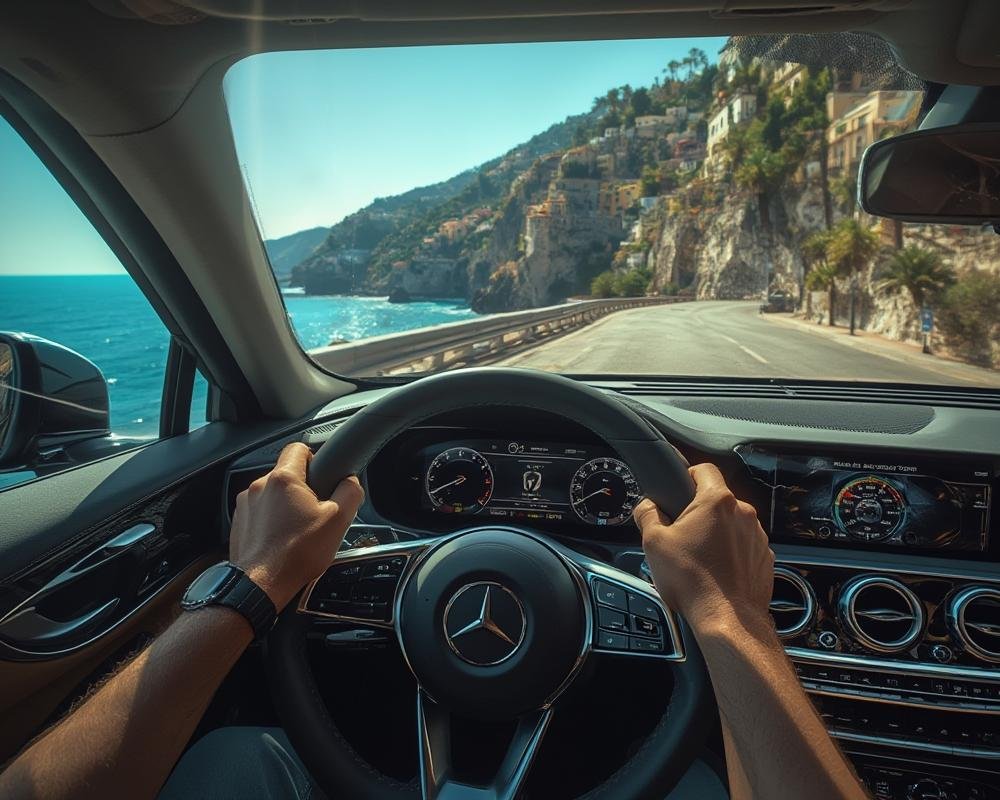
Precise scenic route segments (coastal drives to actually use)
Prioritize these segments for your scenic French Riviera drive:
- Nice → Villefranche-sur-Mer → Èze → Monaco: Take the lower corniche (M6098). Stop at Villefranche port (panorama over bay), then at Èze for the 92m-high medieval views. Clifftop pull-offs abound.
- Nice → Cap-Ferrat → Beaulieu: Boulevard Maeterlinck to Beaulieu (promenade, marina), then walk Promenade Maurice Rouvier (1.5km along the water) to Cap-Ferrat. Park at either end.
- Nice → Antibes → Cannes: Cruise the D6098 (coastal), stop for Antibes old port, continue Croisette (Cannes)—a palm-lined 2km highlight.
Details: Promenade des Anglais (Nice)—7km, best driven sunrise/sunset; Boulevard de la Croisette (Cannes)—2km; Castle Hill (Nice): park below and walk 15 min to 92m summit; Maurice Rouvier—1.5km flat walk linking Beaulieu/Cap-Ferrat.
Top 3 often-overlooked scenic drives & viewpoints to highlight
Promenade Maurice Rouvier (Beaulieu to Cap-Ferrat): Scenic, nearly flat, accessible even in peak hours. Walk it for sunrise or golden-hour photos with Cap-Ferrat’s villas sparkling across the bay.
Sentier du Littoral (from Paloma Beach, St Jean Cap Ferrat): Rugged, wild, and mostly missed by drivers dashing past. Get there before 10am for the best light and easy parking.
Cap Canaille (near Cassis): France’s highest maritime cliff, perfect for a sunset drive. Park at top lots before dusk—views sweep 400m above the sea, and it’s rarely crowded except midsummer weekends.
Distances & realistic drive times between key stops (what to expect each day)
| Route | Distance | Typical Drive Time |
|---|---|---|
| Nice ⇄ Monaco (via Èze) | 20 km | 35–45 min |
| Nice ⇄ Cannes | 33 km | 45–60 min (longer in summer) |
| Nice ⇄ Antibes | 23 km | 30–40 min |
| Antibes ⇄ Èze | 32 km | 50–60 min |
| Èze ⇄ Menton | 20 km | 30–40 min |
| Nice ⇄ St Jean Cap Ferrat | 10 km | 20–30 min (traffic/parking variable) |
| Nice ⇄ Grasse (inland) | 37 km | 50–60 min |
Note: Traffic, toll booths, and parking hunts can double typical times in July-August, especially weekend and festival days. Always check with real-time navigation.
Common driving challenges and exact avoidance tactics
- Traffic jams: Peak between 8–10am and 4–7pm near Nice, Monaco, and Cannes. Avoid by starting early or shifting long drives to midday.
- Parking pain: Expect paid parking at beaches (Paloma in Cap Ferrat), promenades, and old towns. Get to main lots before 9am or use satellite lots near train stations. Free street spots are rare and tightly regulated.
- Narrow and steep roads: Especially in Èze, Roquebrune-Cap-Martin, and old Grasse. Use compact cars and always park before the historic core—it saves your nerves.
- Busy weekends & events: Cannes Film Festival, Monaco Grand Prix, and Nice Carnival cripple road access and inflate parking prices. Go by train or bus, or build extra rest days outside major towns.
- Best tactic: For Nice ⇄ Monaco, take the TER train (20 min, frequent, sea views). Pick up your rental after leaving Nice for inland legs.
Costs — daily and total budget template (rental, fuel, tolls, parking, attractions)
| Expense | Per Day (Est.) |
|---|---|
| Car rental (compact/auto, peak summer) | €55–75 |
| Fuel (100km/day avg) | €15–20 |
| Tolls (A8 Autoroute; most local trips n/a) | €3–8 (if using A8) |
| Parking | €12–25 (city center/beach lots) |
| Main attraction (e.g., Villa Ephrussi) | €16 (adults); kids/families discounts apply |
| Grand Total (5-day trip, 2 adults) | €400–600 (not incl. hotels/meals) |
Data gaps: No definitive, up-to-date sources on exact fuel or toll costs; always check current toll rates with this calculator before setting budget.
2024 road rules, speed limits, local regs (what international drivers most often miss)
- Speed limits (check road signs!): 130 km/h (motorway, weather permitting), 110 km/h (expressway), 80–90 km/h (rural), 50 km/h (urban). Reduced in rain and near schools.
- Alcohol limit: 0.05% BAC (stricter than UK/US). Random checks possible.
- Equipment: Must carry reflective vest, warning triangle in car. Don’t forget European emissions sticker for Paris/other cities—currently not enforced in Côte d’Azur, but check before arrival.
- Parking: Blue zones require display disc (disque bleu) for free time-limited parking; paid lots require ticket on dashboard.
- Roundabout etiquette: Yield to vehicles already in the circle—most confusion happens here among foreign drivers.
- ZTL/LEZ: No current central ZTL in Nice, Cannes, Monaco, but always verify local restrictions for events or in smaller villages.
- Yearly changes: Always confirm new restrictions and rules on the local government or France’s official highway site before travel.
Car rental and insurance — recommended companies, cover levels, and common rental pitfalls
- Pick-up: Start in Nice (city center, not airport, for best rates) after any planned coastal train days.
- Companies: Europcar, Hertz, Sixt, Avis—widest network, consistent insurance. Local firms sometimes cheaper, but check reviews for dodgy damage charges.
- Insurance: Minimum: CDW (Collision Damage Waiver); best: SCDW (Super CDW, lowers excess). Liability is mandatory—don’t skip. Many credit cards offer coverage, but check if French rentals included, and always decline coverage in case of gaps.
- Pitfalls: Boring but true: Review and photograph every ding/cosmetic issue before driving off. Toll transponder fees and fuel return policies bite travelers often; clarify before departure.
- Car size: Choose the smallest car that fits your group. Compact hatches fit on narrow roads and into old-town parking gaps. Large SUVs/MPVs are discouraged.
More details and full luxury logistics: see our luxury yacht charters French Riviera guide for switch-to-sea alternatives.
Parking — where to park (exact lots), prices, and tricks to avoid high fees
Parking is the make-or-break topic for most French Riviera coastal road trip planners.
- Nice: Q-Park Promenade des Arts (city center), Palais Massena for Promenade access, rates €2.10–€2.60/hour; street parking rare, check blue zone restrictions.
- Monaco: Parking des Pêcheurs (near old town, direct elevator for views), Parking Grimaldi Forum (Larreynaga), both €2–€3/hour, often full after 10am.
- Antibes: Port Vauban (paid, close to old town), free spots on Avenue Jules Grec if early.
- Cannes: Parking Suquet Forville (central, covered), €2.60/hour, steep for all-day; try P+R lots outside city, then use the free green shuttle.
- St Jean Cap Ferrat: Paid lots above Paloma Beach (often full by 10am), and Beaulieu town center—cheaper, easier in off-peak or after 5pm.
Strategy: Always have a backup lot in mind. In crunch, park at suburban train stations—Saint-Augustin (Nice), Biot (for Antibes), or Cagnes-sur-Mer—then train in.
For luxury arrivals: for luxury yacht charters French Riviera at Cannes, Nice or further east, skip car headaches and start your adventure afloat with pre-arranged marina parking included.
Must-see attractions with practical visiting notes (timing, fees, parking)
- Villa Ephrussi de Rothschild (Cap Ferrat): Open daily 10:00–19:00, last entry 18:00; €16 adult, tickets onsite. Park at Cap Ferrat town lots (paid, fill by 10am) or Beaulieu town (easy walk over Rouvier promenade).
- Castle Hill (Nice): Free, open sunrise to dusk; walk up from old town 15–20 minutes. No car access—nearest lots: Promenade des Arts, Saleya/Palais Massena.
- Promenade des Anglais (Nice): 7km seafront, best by foot or bike, very limited parking roadside.
- Èze Village: Walks and hilltop gardens; parking in paid lots below, steep climb (comfortable shoes essential).
- Boulevard de la Croisette (Cannes): 2km, all-day access, parking as above, best explored mornings or late evening for low crowds.
Always double-check opening times, especially for smaller museums and chapels—hours and fees can shift seasonally and on holidays.
Sample day plans (morning/afternoon/evening) for high-photo, low-stress days
Day Plan 1 — Coastal Glide: Early drive from Nice to Villefranche (8–9am for parking), promenade and coffee on the bay. Continue to Èze by 11am, visit gardens and lunch with panoramic view. Park car, take TER train or bus to Monaco for afternoon exploration. Back to Nice after sunset.
Day Plan 2 — Village Hopping: Start inland—Nice to St Paul de Vence, then Grasse for perfume and lunch. Continue to Antibes for sunset over the marina. Dinner on the ramparts.
Day Plan 3 — Luxury Beach Day: Drive Cap-Ferrat early, park near Paloma Beach. Explore Sentier du Littoral path, visit Rothschild Villa, then lunch at Beaulieu-sur-Mer marina before looping back to Nice or continuing to Cannes by late afternoon.
In all cases, minimize car use at peak times; consider boat/ferry links for a break from traffic.
Practical packing, apps, and language snippets for on-the-road ease
- Apps: Parkopedia (parking locator), Waze/Google Maps (live traffic), SNCF Connect (rail schedules), Autoroutes.fr (toll calc), offline maps (Maps.me or Google offline).
- Essentials: Extra phone charger, cash for small lots, sun hat, refillable water, comfortable shoes for village walks, sunglasses, rental contract printout, International Driving Permit.
- French for the road:
- “Où est le parking souterrain?” (Where’s the underground parking?)
- “Où acheter un disque bleu ?” (Where to buy a blue zone parking disc?)
- “J’ai reçu un ticket de stationnement—où payer ?” (I got a parking ticket—where do I pay?)
- “Où est la pompe à essence la plus proche ?” (Where’s the nearest petrol station?)
- Car documents + rental/insurance
- Driver’s license + International Permit
- Reflective vest + warning triangle
- Sun protection (hat, shades, cream)
- Walking shoes for hillside villages
- Offline map/app + train timetable
- Charge cables & backup power
Data gaps & fact-check checklist
Here’s what still needs double-checking before you hit the road or publish your own itinerary:
- Cross-verify all distances & drive times (Waze/Google, official road sites).
- Check 2024 speed limits and road rules using French government sources before booking.
- Insert real-time toll estimates with the official online calculators.
- Re-confirm all current public parking rates and opening hours, especially for Nice, Cannes, Monaco, and Cap Ferrat (city or lot operator sites).
- Update rental company reputations and latest insurance fine print (“excess” terms change yearly).
- Price-verify attractions not cited above—Villa Ephrussi is €16, but others change seasonally.
Conclusion
You don’t need to be a pro to master driving French Riviera—just know the routes, respect local parking, and budget for reality, not just the dream. For more Riviera travel wisdom, explore our full French Riviera Travel Guide: Beaches, Towns & Hidden Gems on the Côte d’Azur. Ready to plan? Start with our printable checklist and trust your instincts: the best view is often just a short walk from the car.
FAQ: Driving French Riviera
Do I need an International Driving Permit to rent a car on the French Riviera?
Most major rental companies require an International Driving Permit if your license is not in French or English—check before you fly, especially for US, Australia, or non-EU travelers. Always carry the physical IDP and your normal license.
What is the best way to avoid high parking fees in Nice or Cannes?
Arrive before 9am, use city-run lots with day rates, or park at suburban stations and take the TER train to city centers. Streets are blue-zone regulated or metered for max 2 hours in most central areas.
Are toll roads common along the French Riviera?
The A8 motorway runs parallel but inland; most coastal drives between Monaco, Nice, Antibes, and Cannes avoid tolls. When heading further (toward Marseille or Italy), expect toll booths and fees—always have a credit card or cash ready.
Can I combine driving with public transport for a stress-free trip?
Absolutely. The regional TER train connects main towns efficiently and bypasses most bottlenecks. Use the car for inland and early daytrips, and trains/buses/ferries for urban sections, especially Nice ⇄ Monaco and Cannes ⇄ Nice.
What if I get a parking fine?
You’ll find instructions on the ticket—in most towns, pay at the local mairie or a tabac (newsagent); delays can double the fee. If using a rental, the agency may charge an admin fee on top.